

The main reason why we are still in France is that I, Hazel, have a great uncle who was killed in the First World War on 26th May 1918 and my cousin, Dorothy, thought it might be an idea to visit his grave on his anniversary. Hense we are now staying in the outskirts of Arras, with the said Dorothy, her husband Rob and sister Grace.
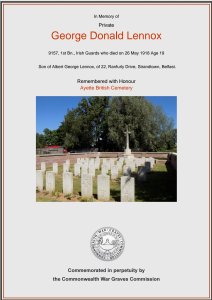
Before we left Ypres we took the opportunity to visit Tyne Cot cemetery and the Canada Gate….
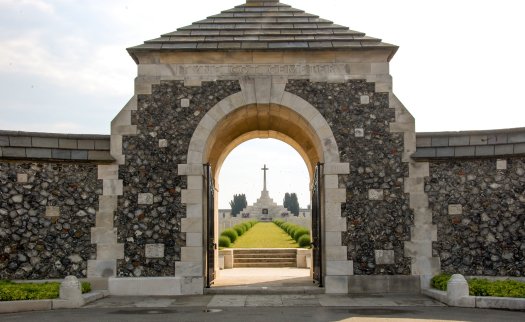
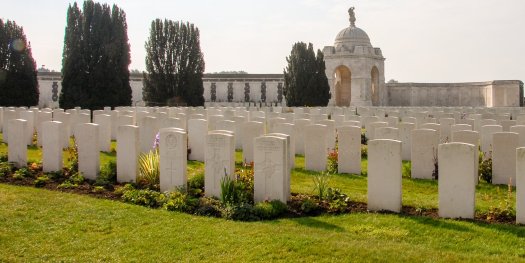
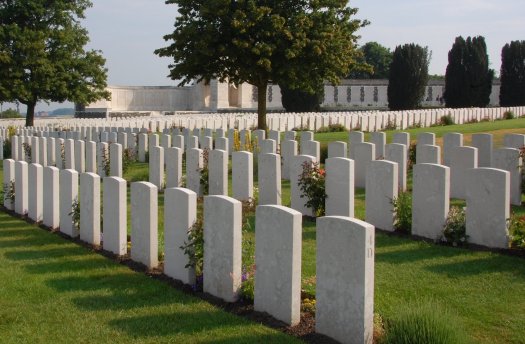
Tyne Cot is the largest Commonwealth War Graves Commission cemetery in the world. It is now the resting place of more than 11,900 servicemen of the British Empire from the First World War. It also bears the names of some 35,000 men of the British and New Zealand forces who have no known grave, nearly all of whom died between August 1917 and November 1918. I can’t imagine what this landscape would look like if there was a headstone for every soldier that died, the lists of names on these memorials are so long.
At Canadalaan in Passchendaele is a new Canadian memorial, the Canada Gate. It was designed by Nova Scotia artist Nancy Keating. Made of steel the twin arches stand four metres high. More than 16,000 Canadians were wounded in the battle of Passchendaele and nearly 4000, killed. It is the second of two “Portals of remembrance” with the other, “Last Steps Memorial Arch, sited on the Halifax waterfront where 350,000 soldiers left for war.
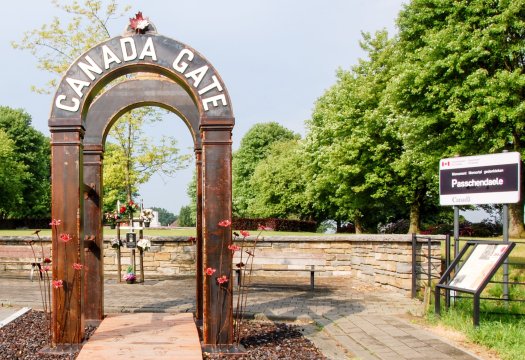
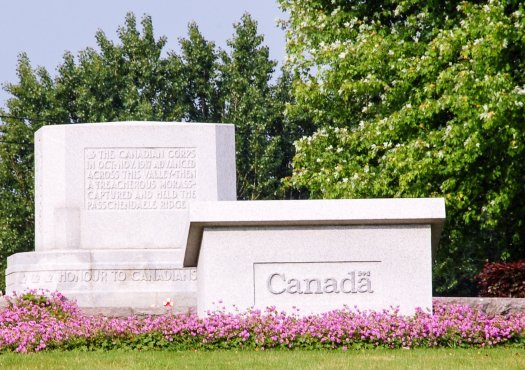
We met up with Dorothy and co at our accommodation in Agnez de Douisans…. in reality we probably spend 10 minutes trying to find the place we were standing right outside!
Having unloaded the contents of our boots we headed for lunch and then on to Arras. The First World War is etched into the landscapes, stones and bricks of the Artois Region. The region has almost 150 British cemeteries and many monuments to the heavy human sacrifice.
Our first visit was to the Wellington Quarry, an underground museum which has been created in a section of the many kilometres of tunnels created in the first world war from those dating back to the middle ages and Roman times which were excavated for the chalk to build with They were very much like the caves in Reims which the champagne houses use to store their fermenting grapes!!
In particular, the museum pays tribute to the work of the New Zealand tunnelers who were instrumental in digging during the build up of the Allied offensive, the Battle of Arras in April 1917. The tunnels and rooms were giving names and numbers to help people find their way!! Wellington is after the capital of New Zealand!
The black lettering is from 1st World War, the red from the 2nd when the locals used the tunnels etc as air raid shelters.
The tunnels were fitted with running water and electricity. Accommodation was available for the soldiers to live and sleep in and there was a hospital for treating the wounded.
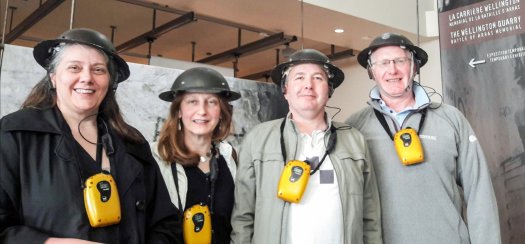
The helmets are for health and safety… The microphone for the tour! As you entered a part of the display the commentary automatically started!
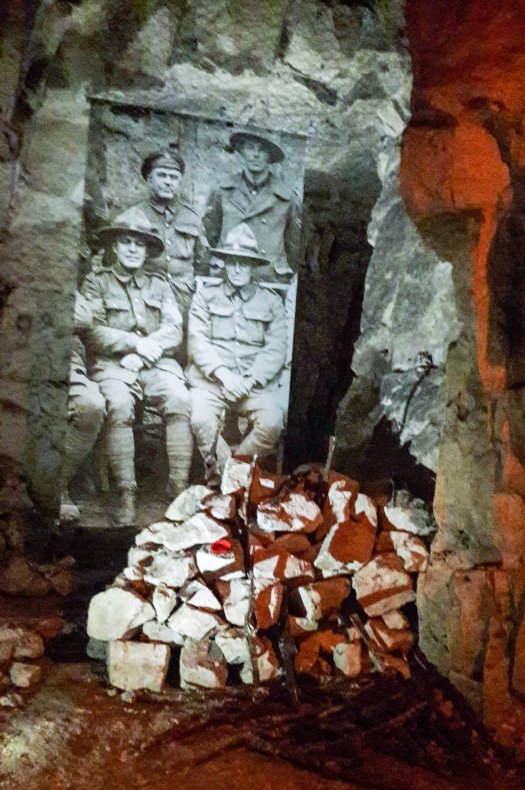
The presentation of this memorial was amazing
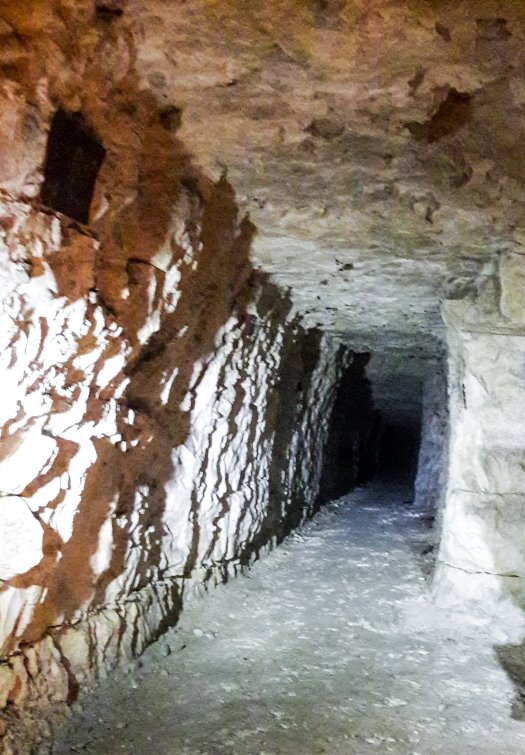
Bit different from the caves in Champagne world….
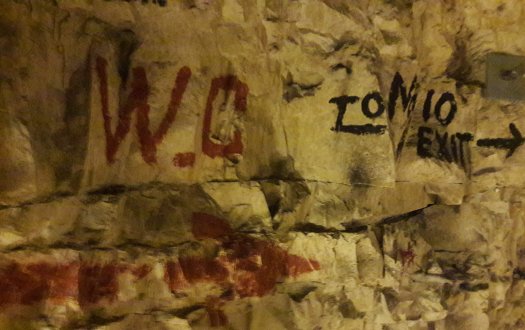
Black WWI signs… Red WW2
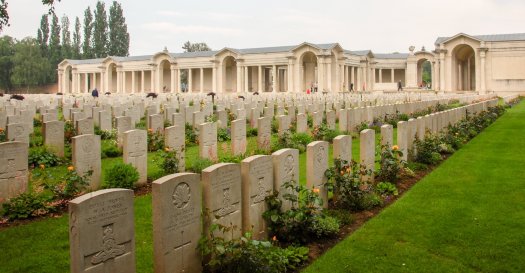
Having been in awe at the Wellington tunnels we visited Faubourg d’Amiens cemetery. The cemetery contains the graves of 2,652 Commonwealth soldiers, as well as the graves of some German prisoners of war. The wall surrounding it is a memorial to the 35,928 British, New Zealand and South African soldiers who died in the Arras area and whose bodies were never found. There is also a dedication to the Royal Flying Corps personnel killed on the Western Front.
 H&P Adventures
Paul looks well with the tin hat on. Where the picture of you ?
LikeLiked by 1 person