

This morning we experienced a phenomenon not natural to us! We appeared to have more space in the boot than when we arrived here….. either our packing is getting better or we are losing stuff along the way! Even the bag nursed by the passenger on transit days fitted in along with coats and fleeces! Room for some shopping me thinks 😊

Today’s journey to Adriers, situated in the Nouvelle-Aquitaine area, was meticulously planned to avoid toll roads and have us on the A20 motorway for only two exits.
The plan also was to have the roof down! The heavy clouds quickly gave way to rain shortly after our departure and a unanimous decision was taken to continue on the motorway and make progress. This only led to the unexplainable anxiety of the passenger! Cruise control felt like the car was out of control and there was more braking on the left side of the car than there was on the right! The weather also appeared much brighter on the left… where our original route would have taken us.
As we approached Limoges the weather was still inclement and the discussion turned to whether we should stop and visit the city or continue. Google was consulted on the top places to visit and, being the Philistines that we are, we decided to keep going and stop at the ‘Centre de la Mémoire’ 21km northwest of Limoges instead. Not before I snapped a few memories of the city though…. they have a trolly bus…. and a lovely big building not unlike a Hotel de Ville!!
And for the record Limoges is a city in southwest-central France. It’s known for its decorated porcelain, much of which is on display at the Musée National Adrien Dubouché. In the historic centre, medieval timber-framed houses line Rue details la Boucherie. Set in the former Episcopal Palace, the Musée des Beaux-Arts showcases the history of the city’s medieval enamel. The Gothic Cathédrale St-Étienne dear Limoges took 6 centuries to complete.


‘Centre de la Mémoire’ 21km northwest of Limoges
As we arrived at Oradour-sur-Glane the rain eased slightly. The story of the massacre of the village on the afternoon of 10 June 1944 is harrowing and one of the worst Nazi war crimes committed on French soil.
German lorries belonging to the SS ‘Das Reich’ Division surrounded the town and ultimately killed 642 people, including 193 children. Only one woman and five men survived the massacre. The modern Centre de la Mémoire does an excellent job contextualizing the massacre using historical exhibitions, videos and survivors’ testimonies.
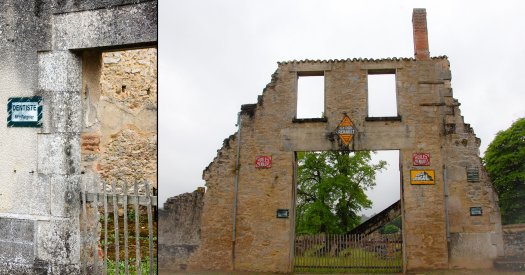
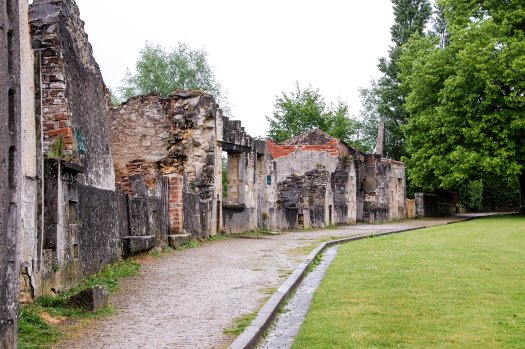
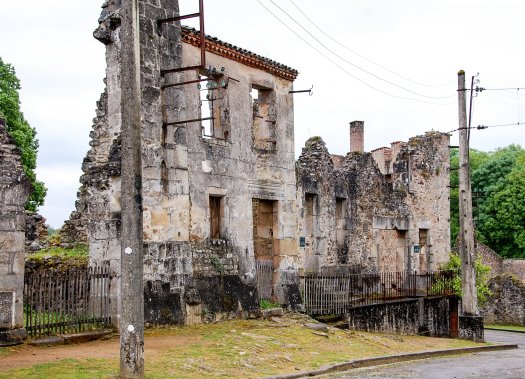
Since these events, the entire village of Oradour-sur-Glane has been left untouched, complete with pre-war tram tracks and electricity lines, the blackened shells of buildings and the rusting hulks of 1930s automobiles – an evocative memorial to a village caught up in the brutal tide of war.
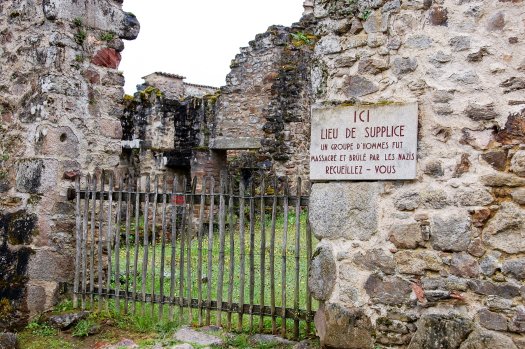
On the day of the massacre the townspeople were rounded up in the market square. The men were divided into groups and forced into granges (barns), where they were machine-gunned before the structures were set alight.
According to a survivor’s account, the SS men then began shooting, aiming for their legs. When victims were unable to move, the SS men covered them with fuel and set the barns on fire. Only six men managed to escape. One of them was later seen walking down a road and was shot dead. In all, 190 Frenchmen died.

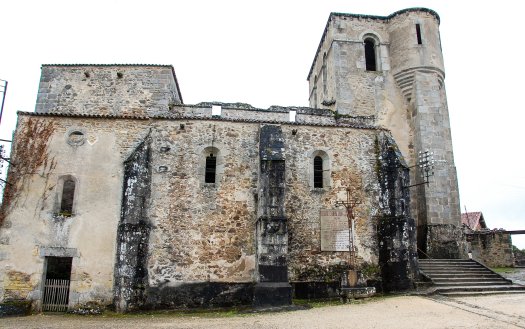
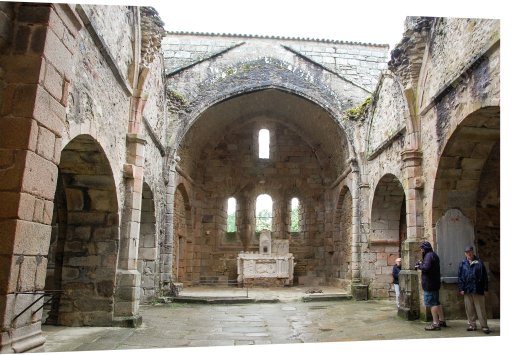
The women and children were locked in the church, and the village was looted. The SS men next proceeded to the church and placed an incendiary device beside it. When it was ignited, women and children tried to escape through the doors and windows, only to be met with machine-gun fire. 247 women and 205 children died in the brutal attack. The only survivor was 47-year-old Marguerite Rouffanche. She escaped through a rear sacristy window, followed by a young woman and child. All three were shot, two of them fatally. Rouffanche crawled to some pea bushes and remained hidden overnight until she was found and rescued the next morning.

About twenty villagers had fled Oradour-sur-Glane as soon as the SS unit had appeared. That night, the village was partially razed. Several days later, the survivors were allowed to bury the 642 dead inhabitants of Oradour-sur-Glane who had been killed in just a few hours. Other records would suggest that the Germans returned and buried the bodies to cover up the extent of the barbarity.
Adolf Diekmann said the atrocity was in retaliation for the partisan activity in nearby Tulle and the kidnapping of an SS commander, Helmut Kämpfe.
After the war, General Charles de Gaulle decided the village should never be rebuilt, but would remain a memorial to the cruelty of the Nazi occupation.
The new village of Oradour-sur-Glane (population 2,375 in 2012), northwest of the site of the massacre, was built after the war. The ruins of the original village remain as a memorial to the dead and to represent similar sites and events.
A number of the buildings have plaques to identify who had lived there prior to the massacre. Here is a selection of some of our photos. An eerie place to wander especially on a damp, dull day.



If you are interested in this story I’ve just come across this website that you might be interested in…


As long as you two don’t decide to open a small bar somewhere. But I could think of worse things to do all day smoking gauloises and drinking vin rouge.
LikeLiked by 1 person
I am tempted… the big lad isn’t 😎
LikeLike