

I have no doubt that the scenery on the journey from Bilbao to San Sebastian was stunning. What we could see of it through the torrential rain was amazing! Mountains, greenery, gorges….
We started off on the motorways but the spray was horrendous. Whilst the Spanish have to be complimented on their road network and the condition of the roads, the weather is the weather! The coastal road from Deba through Orio to San Sebastian reminded us of the Antrim coast road on a bigger scale. Sorry…. no pictures for this part!
A visit to the Basque region has to include San Sebastian. As well as being the European City of Culture in 2016, it is renowned for the quality of its pintxos and has more Michelin-starred restaurants per capita than anywhere else in the world. We didn’t eat at the 3* Arzak, however, we did sample the taster menu at the Michelin mentioned Bodegon Alejandro.


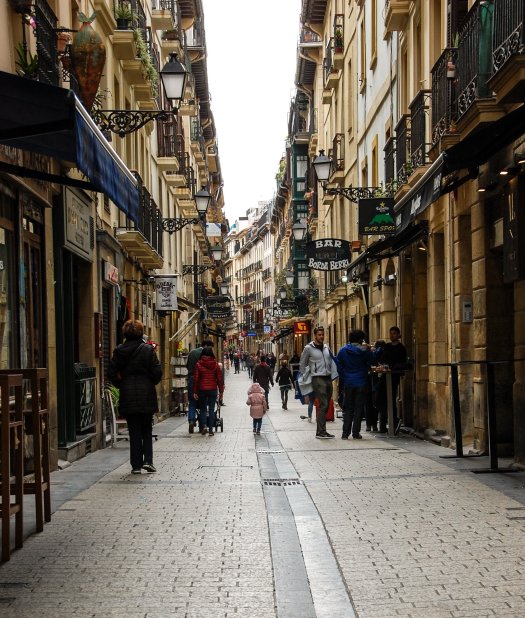
Eating here was a feat in itself as we had spent almost an hour wandering the old town trying to decide which of the hundred odd bars and restaurants we should try!
Thankfully the rain had eased and then stopped to allow us to visit some of the sights….
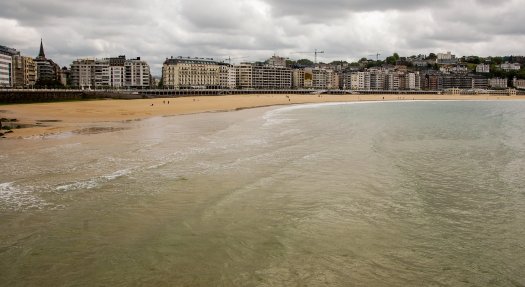
San Sebastian has three beautiful beaches. La Concha beach is renowned for its almost perfectly arced bay, arguably Europes most beautiful urban beach.

Parte Vieja… The Old Town is formed of narrow streets at the foot of Mount Urgull. Which includes Constitution Square and the Santa Maria del Coro Church.
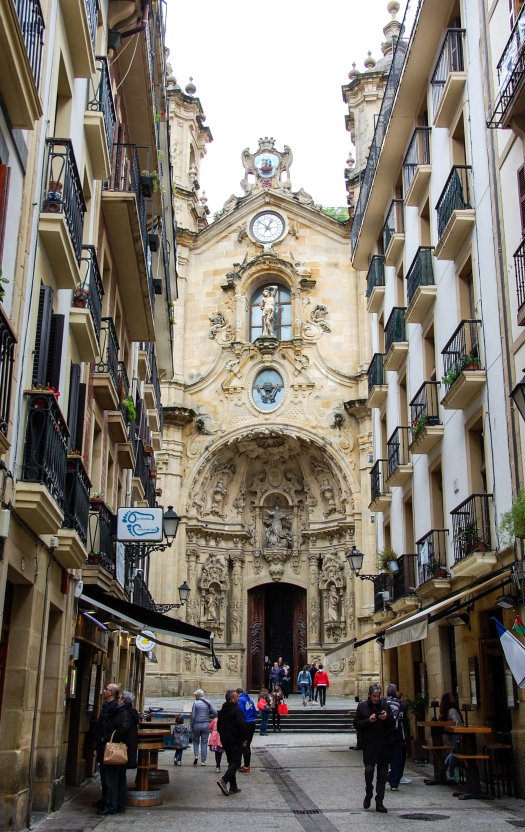
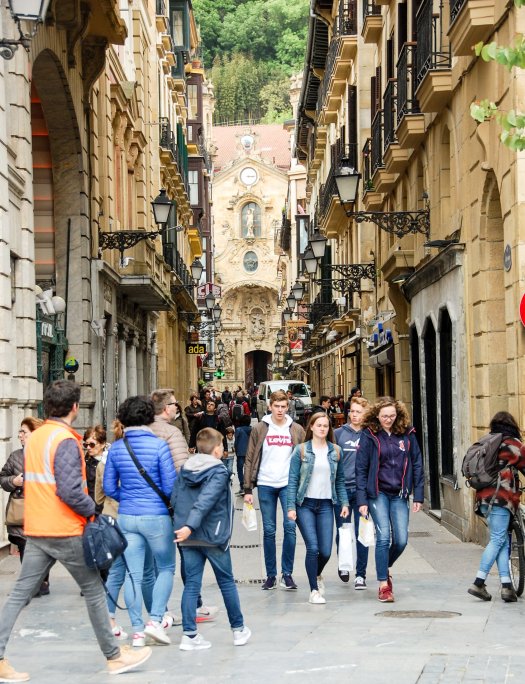
Located between La Concha beach and the old town is the Ayuntamiento (city hall) one of the most majestic buildings in San Sebastian which was originally built in 1882 as a casino hall.

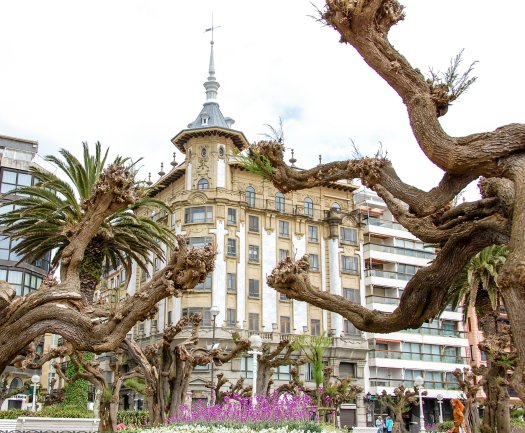
Between where we parked our car and the old town we passed through the ‘Romantic centre’ which is filled with beautiful buildings from the 19th century. It is also the shopping centre of San Sebastian (unfortunately our boot is full)! Not even enough room for a duck!


The Good Shepherd Cathedral is a perfect example of the foreign European influences that helped shape San Sebastian during the second half of the 19th century.

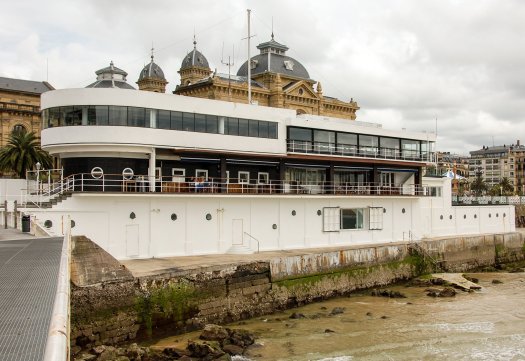
Club Nautico, is a building in the rationalist style to look like a moored ship and built in 1928. It was first called an unsightly box but its clean whiteness, sober lines and its boat shape were well suited to its seaside location. It is now the headquarters of the Real Club Nautico de San Sebastian. It is now viewed as one of the most important Spanish examples of modern architecture and was recently declared a ‘Site of Cultural Interest’.
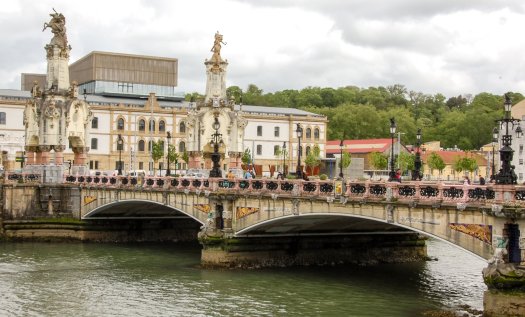
San Sebastian straddles the Urmea River. We crossed it using the Maria Christina Bridge, but in 1905 and known for its four impressive obelisks. Each one measuring 18m in height and crowned by groups of sculptures.
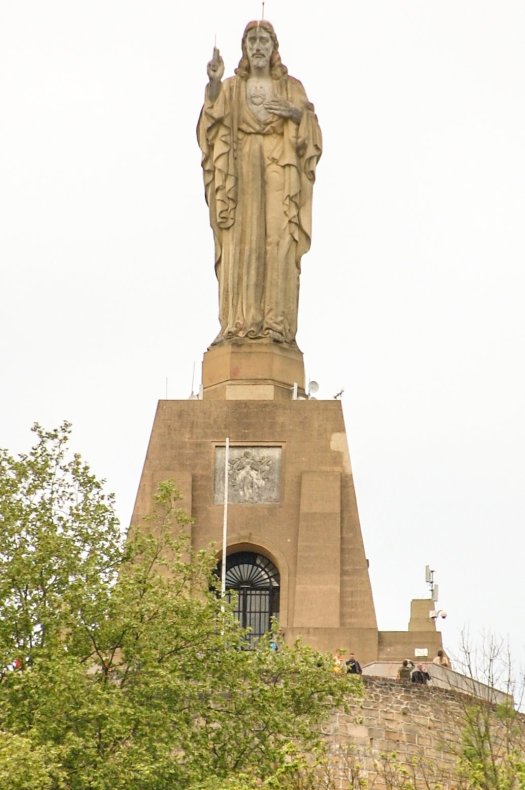
The summit of Monte Urgull is crowned by the 12th Century Castillo de la Nota fortress. The Sagrado Corazon, also known as the Cristo de la Mora, overlooks the city. This monument can be seen from four miles out to sea.
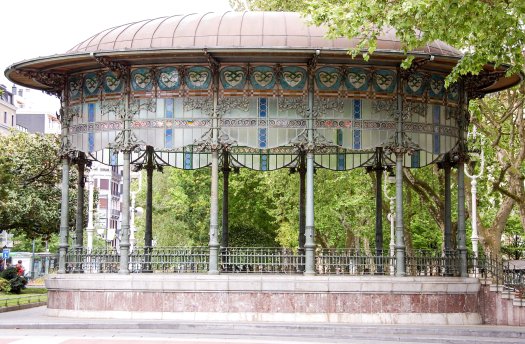
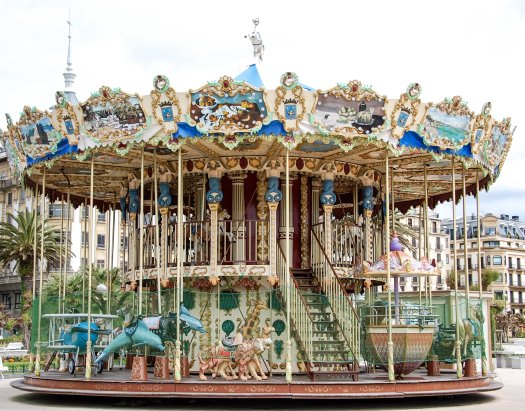
The classic Porifan bandstand, the merry go round and architecture of the buildings caught our interest and imagination.
We continued our journey east into France with the roof down, crossing the border at Irun. Whilst we had passports in hand it was much like crossing between Strabane and Lifford (at the minute). The only indication that we were in France was the warning from the satnav.
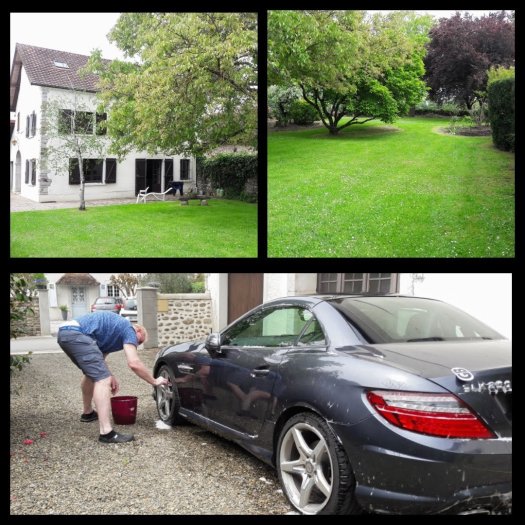
Our base for the next few days is in a gite in Rivareyte, small hamlet on the outskirts of Sauveterre-de-Béarn. This beautiful holiday home of friends has allowed us to catch up with washing etc
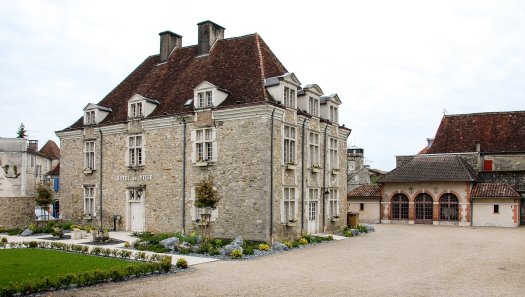
Sauveterre-de-Béarn is a medieval town set in the beautiful countryside perched above the Gave d’ Oloron. There is an interesting guided walk around the town. Points of interest include the Town Hall – built in renaissance style it was the property of the family of the Marquis de Nays and purchased by the town in 1972.
Opposite the Town Hall is St André’s Church, constructed in the 12th century, with a mixture of architectural styles. Unusually St André’s was fortified, proved by the fact that its bell tower was crenellated. It played an important part in the defence of the town.

From the Church there are fantastic views across to the river and of the chain of the Pyrenees.
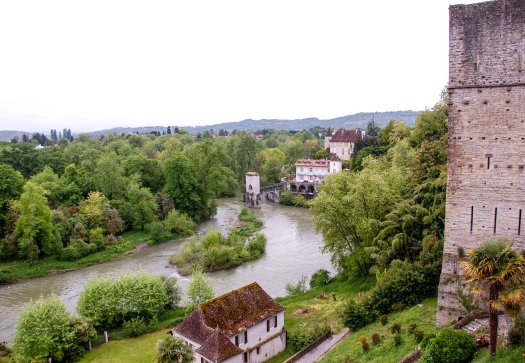
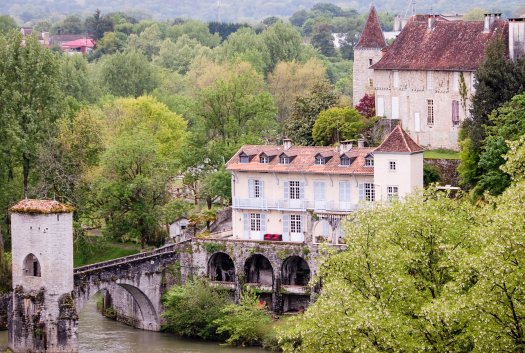
The footpath down from the Church leads to a fortified bridge, the Bridge of Legend. It takes its name from the legend of Queen Sancie (no connection to Game of Thrones). In 1170, accused of having killed her new born son,, in front of 3000 people, she was thrown from the bridge with her hands and feet bound, to be judged by God. As the crowd waited until the sovereign drowned, she floated to the surface and the current carried her to the bank. Sancie, proved innocent, was acclaimed by the crowd and transported with joy back in to the town.


 H&P Adventures
Hello my lovely friends
LikeLiked by 1 person
Greetings… 🇫🇷🍷
LikeLiked by 1 person