


We had the most amazing first day on our trip to Guernsey! We met a beautiful couple from Iceland at the bar in the airport at Dublin, off to their holiday home in Bulgaria for two weeks then on to Switzerland to visit their son!

The ATR72-600 sitting on the tarmac is probably one of the smallest planes I have travelled on. Built in France it has two Pratt & Whitney turboprops with a range of 1000 miles. Our route took us across the Irish Sea, Cardigan Bay and the Bristol Channel leaving England behind at Exeter, a flight of 1hr 20mins, a distance of 318 miles.

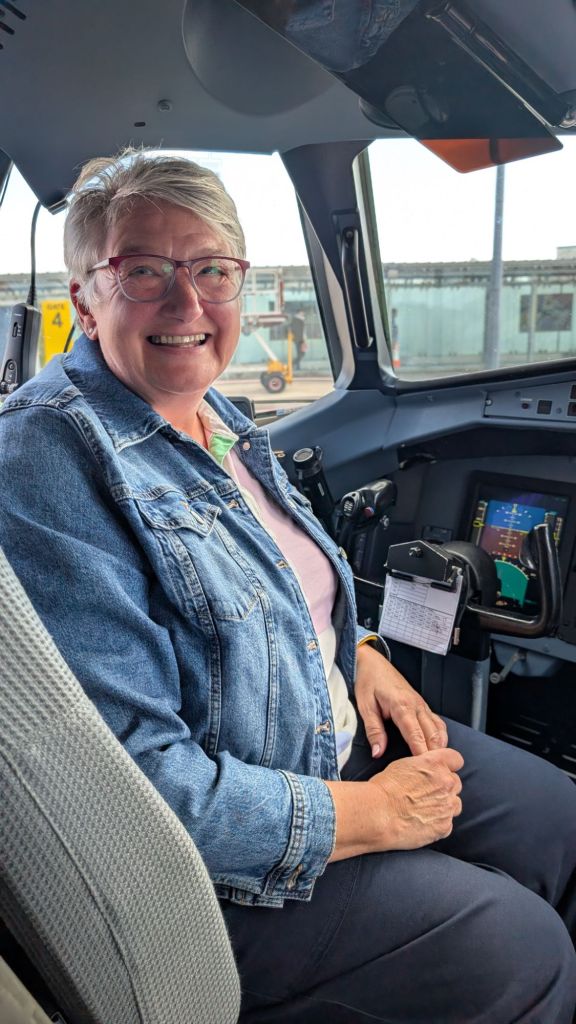
We were well looked after on the flight by Faye and Mia, who also had plenty of recommendations for our stay on Guernsey. Our captain, Matt, was absolutely brilliant, his commentary was second to none, such enthusiasm! Then to top it all off I got to sit in the cockpit with the co-pilot Sam who actually did all the hard work flying the plan! A little kindness and engagement with staff does go a long way!
At the airport we met up with Grace and Joseph and took the scenic route to our accommodation in Perelle.
First stop was Portelet Harbour, a small working fishing harbour where you can relax and watch the fishing boats or enjoy the sea and sand on this west-facing, safe and sheltered beach. Not today though with low tide but it is also great for rockpooling!

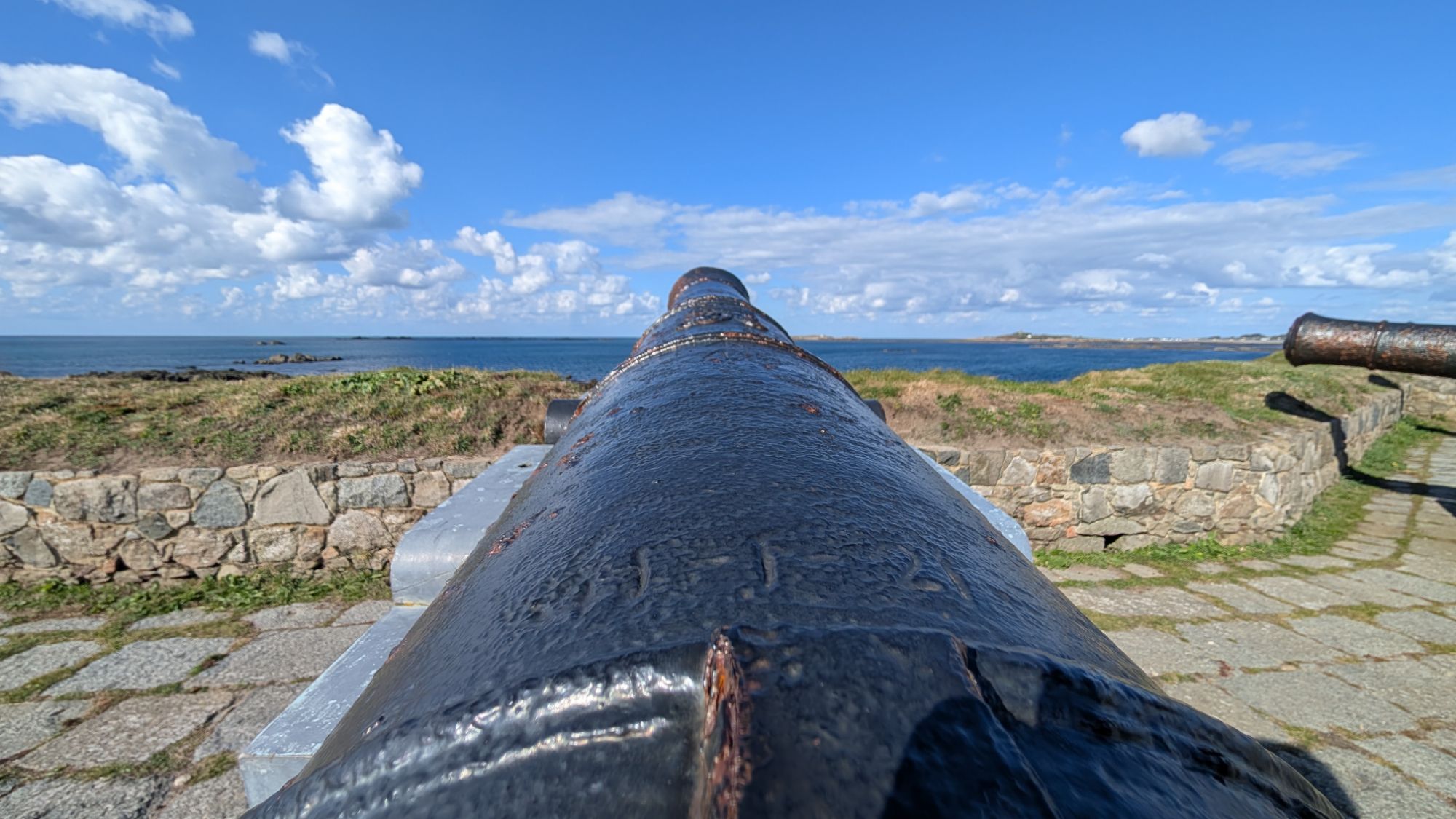
A short walk brings you to Fort Pezeries. A fort has stood on this spot since at least 1680 to protect the southern half of Rocquaine Bay. At that time it was armed with two ‘sakers’ (3½ inch calibre cannons). During the 18th century the gun platform was extended and musket steps were added.

During the Second World War the German occupying forces built an earthwork machine gun position on the shortened western wall.
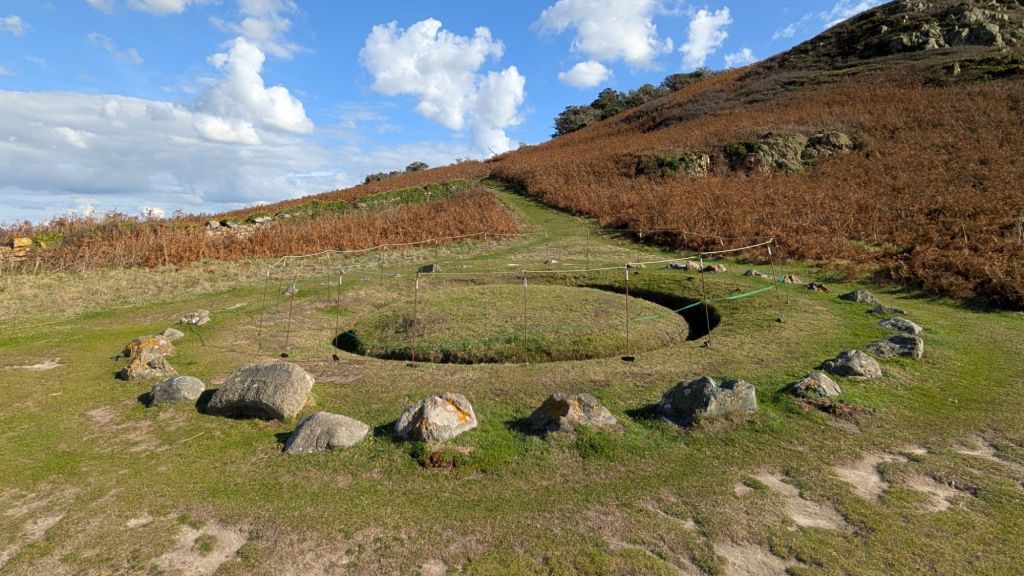
A short distance from the fort is La Table des Pions. Many superstitions surround the stone circle and ‘table’ dug into the common: in particular, it is said that if you walk around the circle three times and make a wish, it will come true. This element of superstition and other-worldliness is only enhanced by the impressive backdrop of the dramatic cliffs and the expanse of deep-blue sea.
The original purpose of ‘Les Tables Des Pions’ is actually far more mundane. Going back to the 1700s, a parade known as the ‘Chevauchee’ would take place every two years to check the ‘Chemain du Roi’, or path of the King, was kept clear – allowing dignitaries to travel around the island unobstructed. I much prefer the wishing story!
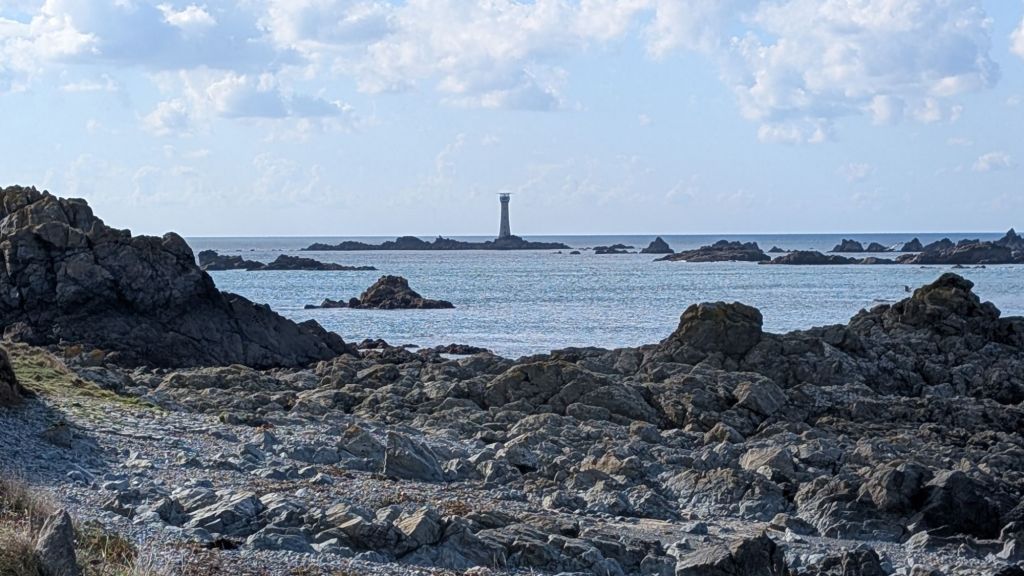
The foundation stone of Les Hanois lighthouse was laid on the 15th August 1860 and the lighthouse was completed two years later. The light was lit on 8th December 1862. The lighthouse, built of Cornish stone, stands one hundred feet (33 metres) high with a diameter of thirty two feet (9.8 metres) with nine internal levels. The lamp is a 35 watt metal arc that produces two white flashes every 13 seconds. It has a maximum range of 20 nautical miles. The fog signal is controlled by an automatic fog detector. The light-house was manned by two 3-man crews who each worked a 4 week shift.
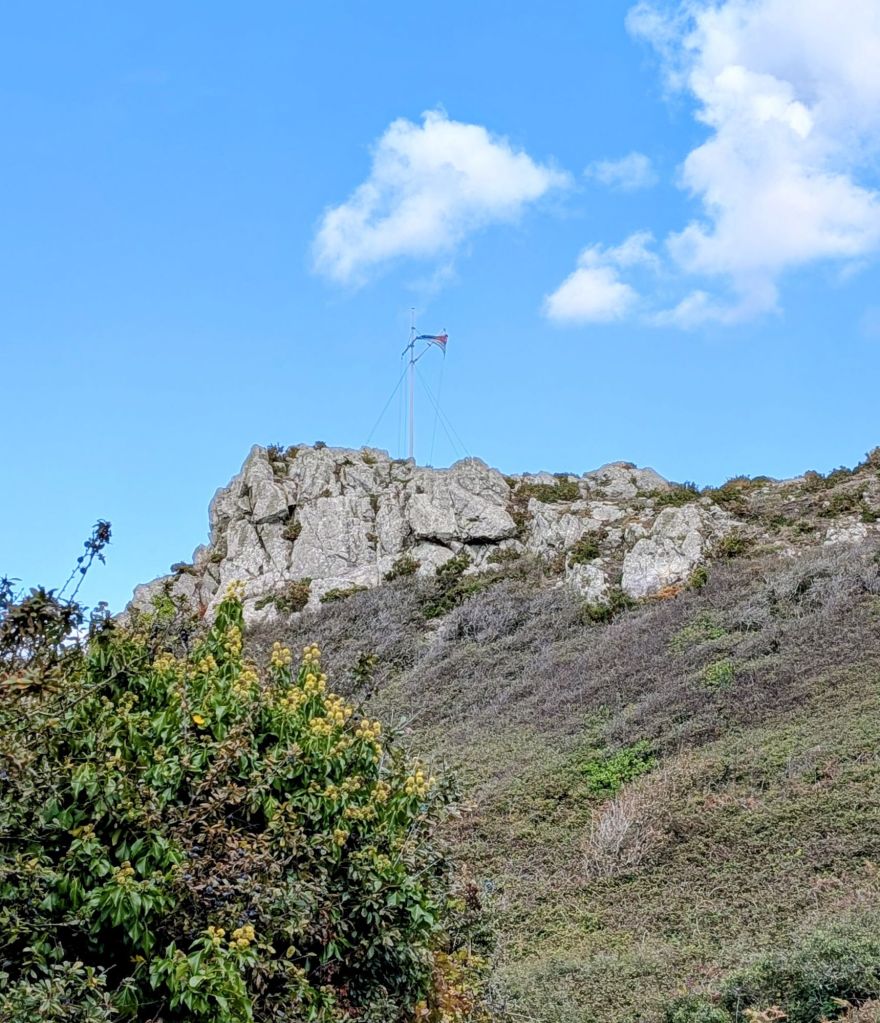
This high ground at La Varde was also used by the lighthouse keepers’ wives to send semaphore messages to their husbands who were on duty on the lighthouse.

Built in the late 1800’s, this used to house the families and keepers of Les Hanois Lighthouse. Now it’s three separate cottages one of which is occupied by the Mayor of the Parish free of charge!
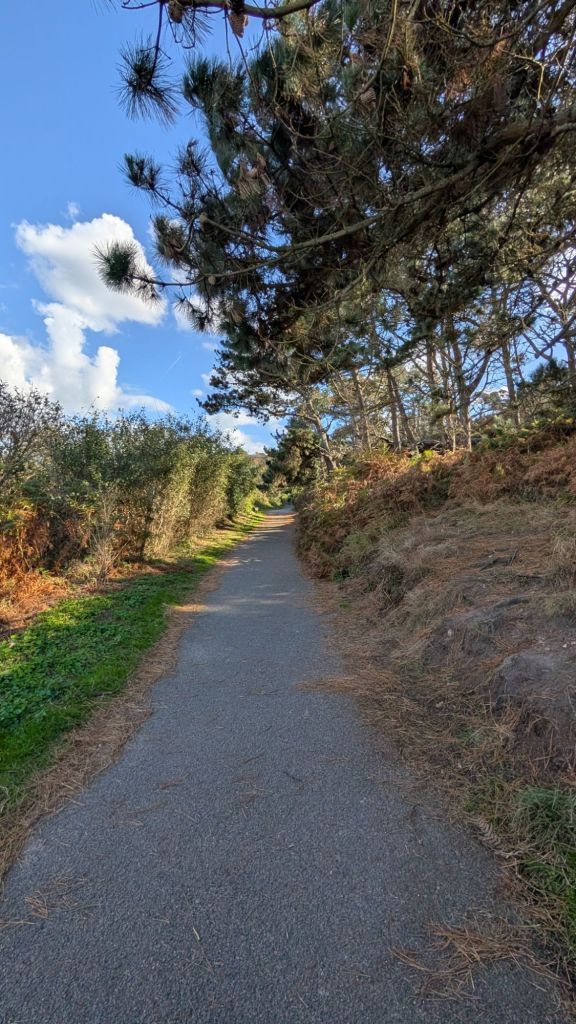

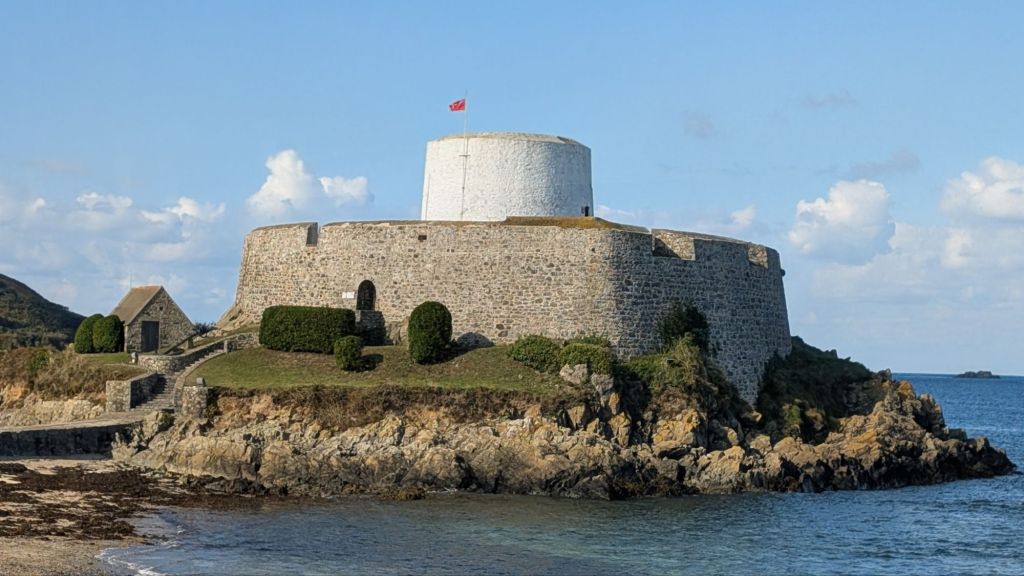
Fort Grey stands on the site of an earlier smaller castle known as the Château de Rocquaine. In 1803, the ruins of the Château were demolished and replaced with a battery capable of containing 12 to 14 guns, protected by a semi-circular wall which was 3m (10ft) thick.
The fort formed part of a chain of coastal defences built to protect Guernsey against possible French attack but it is one of only three Martello towers ever built on the island. It was named Fort Grey in honour of General Charles, Earl Grey of Howick, K.B., who was Governor of Guernsey from 1797 to 1807.

Hohlgangsanlagen (cave passage installations) were built to store vehicles, ammunition, food, fuel and equipment. Sixteen tunnels were planned in 1942, and this was increased to twenty nine in 1943. Fourteen tunnels were started, but few were completely finished. Some were half built, others were abandoned early when poor rock quality was hit, or priorities changed.


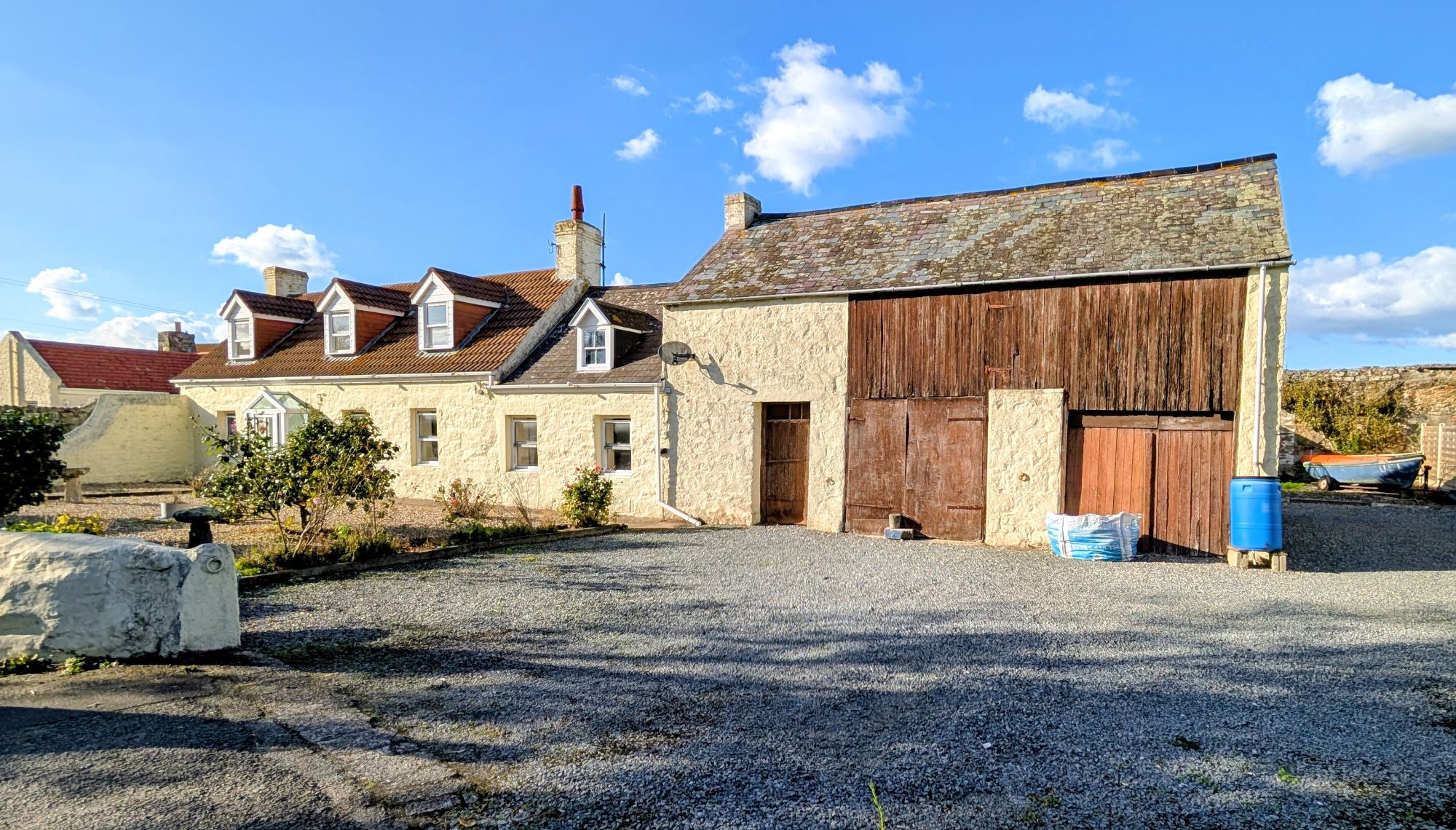
I don’t know how young people are expected to get on the property ladder in Guernsey. This house and barn are for sale at the end of our road. The listing says it requires some modernisation…..and it’s still a cool £825,000!


Thank you for taking the time to read my mutterings, I hope you have enjoyed our journey so far.
 H&P Adventures
Thanks Hazel for taking time to write and share your day one adventure im Guernsey 😘
LikeLike