

Although the aqueduct opened on Friday afternoon we stayed put to watch 2023, Super Saturday, Six Nations rugby. Delighted that the John Gilbert pub accommodated us with a great table, food and beverages for most of the afternoon. Delighted too with the results.

Sunday morning and we set off early in the direction of Trafford and Sale. A mile into our journey and we passed Monton Lighthouse! Not what you expect to see on the side of a canal. Fourteen feet in diameter and 40 feet high, it was built by a canal enthusiast called Phil, just because he could! Used as a weekend retreat it even has a light at the top which is only used for special occasions.

It was well seen that the aqueduct was open, seven boats passed us as we did the two mile journey towards it! More than we have seen in a fortnight 😀


After the aqueduct the canal continues through very industrialised areas of Trafford and Salford.
Prior to the Ship Canal’s opening in 1894, Trafford Park was the country seat of the de Trafford family who had held sway thereabouts since the 11th century. Fierce opponents of the Manchester Ship Canal (MSC) – on the grounds that its construction would render Trafford Hall uninhabitable – the family put the estate on the market in 1896. Amidst considerable controversy, it was purchased by the developer Ernest Hoole, who joined forces with Marshall Stevens, General Manager of the MSC, to create Trafford Park, the world’s first industrial estate. At its zenith during the Second World War, Trafford Park employed over seventy thousand people. Trafford Park Village was developed to house the workforce. It was modelled on the American gridiron pattern, with streets and avenues given numbers rather than names.

Barges were used to bring grain from Salford Docks to Kellogg’s, just prior to the Second World War as part of an initially ill-timed drive to enter the European health food market. The use of barges continued until 1974. Merchant ships carrying up to 10,000 tons of American grain would tranship their cargoes into a fleet of Bridgewater barges.
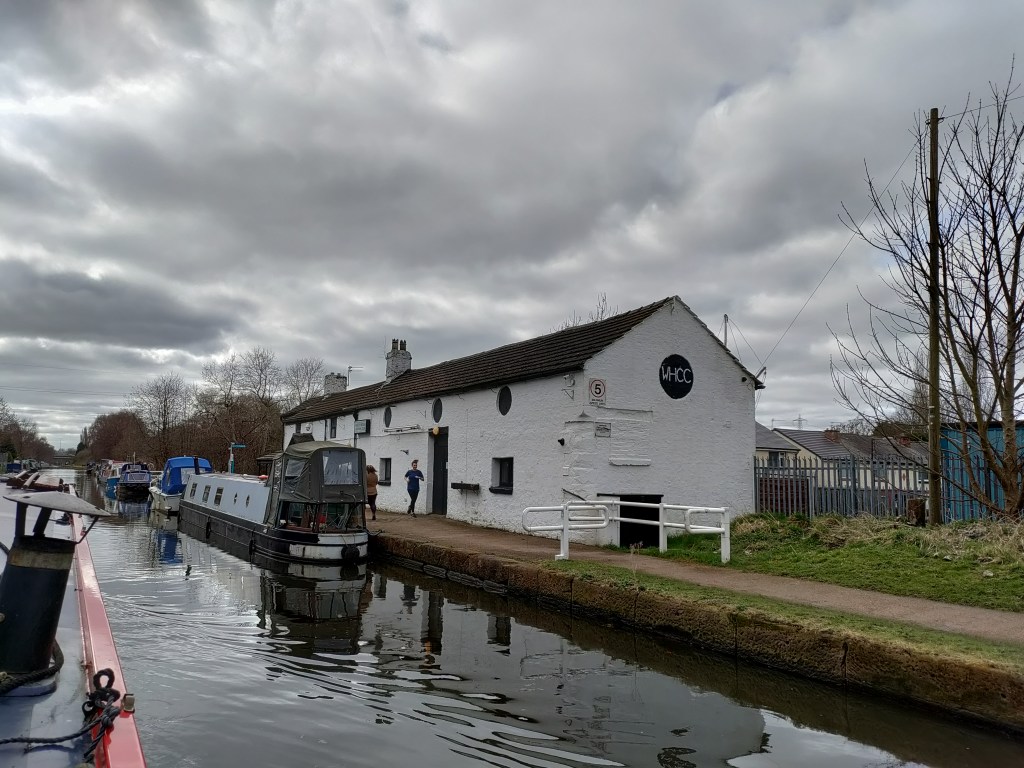
The Watch House at Stretford was used as a staging post by the packet boat services that ran on the Bridgewater Canal. There would be someone looking out for the packet boat in order to have fresh horses ready, so that as little time possible was wasted in changing over. The Watch House Cruising Club now uses the building as a clubhouse.
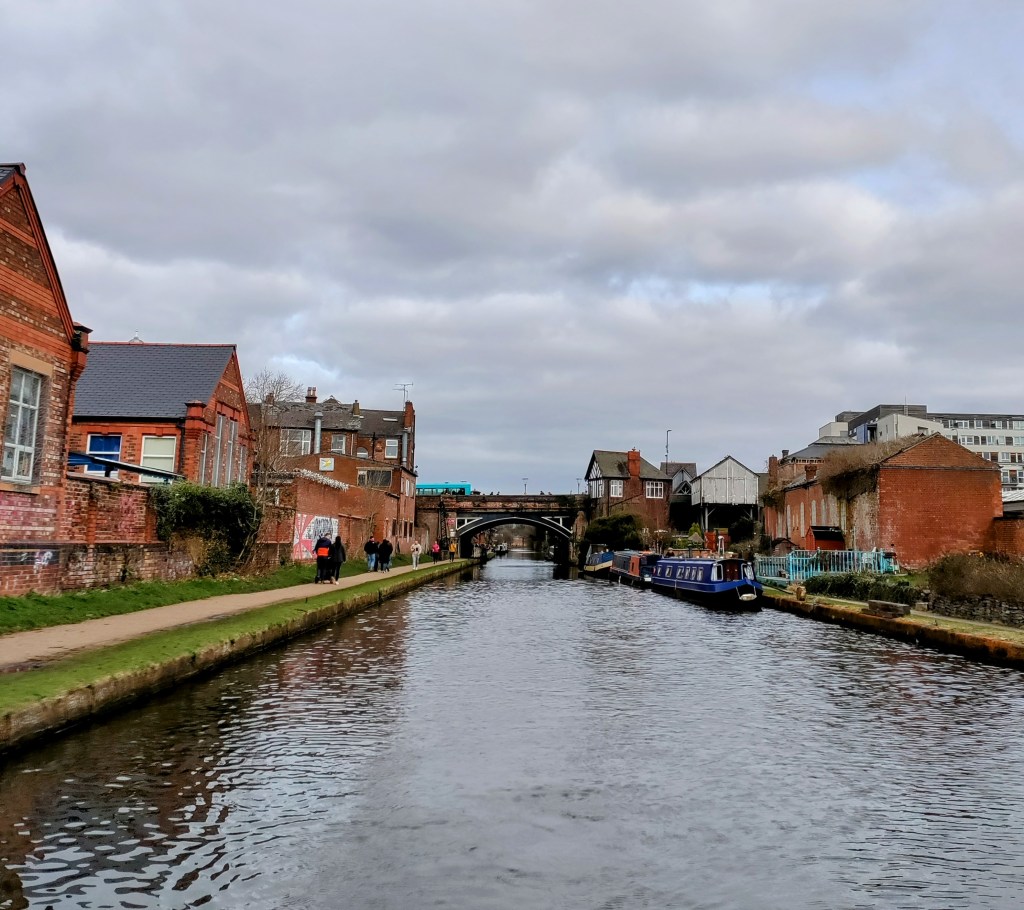
I’m not surprised that this part of the canal at Sale is popular with rowing clubs. It is as straight as a die for approximately 3 miles!


There is no doubt about it, the Bridgewater way is very popular with families, walkers, cyclists and running groups!
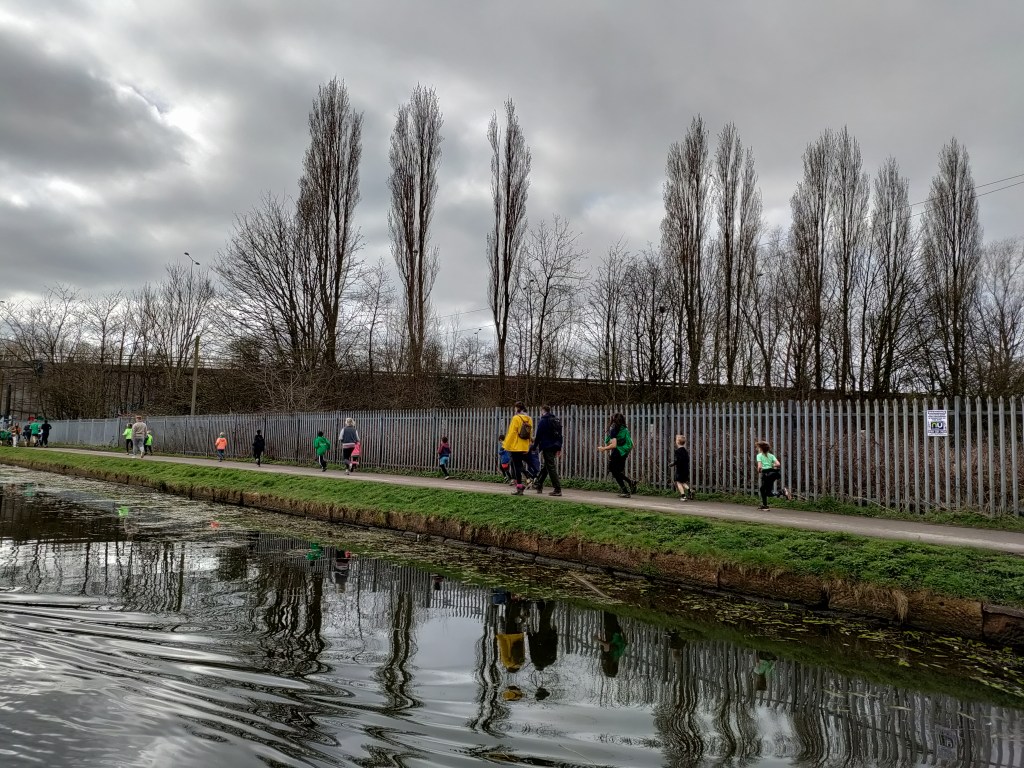

– two cars on the towpath under the M60!


It wasn’t our intention to travel 17 miles on Sunday but a lack of mooring opportunities brought us as far as Lymm. I should probably explain that there are three ways to tie up your boat. The first is on to rings concreted in to the towpath. The second is by dropping a pin through the armco barrier at the side of the canal and tieing on to that. The third is to drive a stake into the towpath and tie on to it. The third option is one our skipper will avoid at all costs! To be honest we probably wouldn’t sleep much waiting for the stake to come out and leave us floating away in the night! Hence our journey on to Lymm .
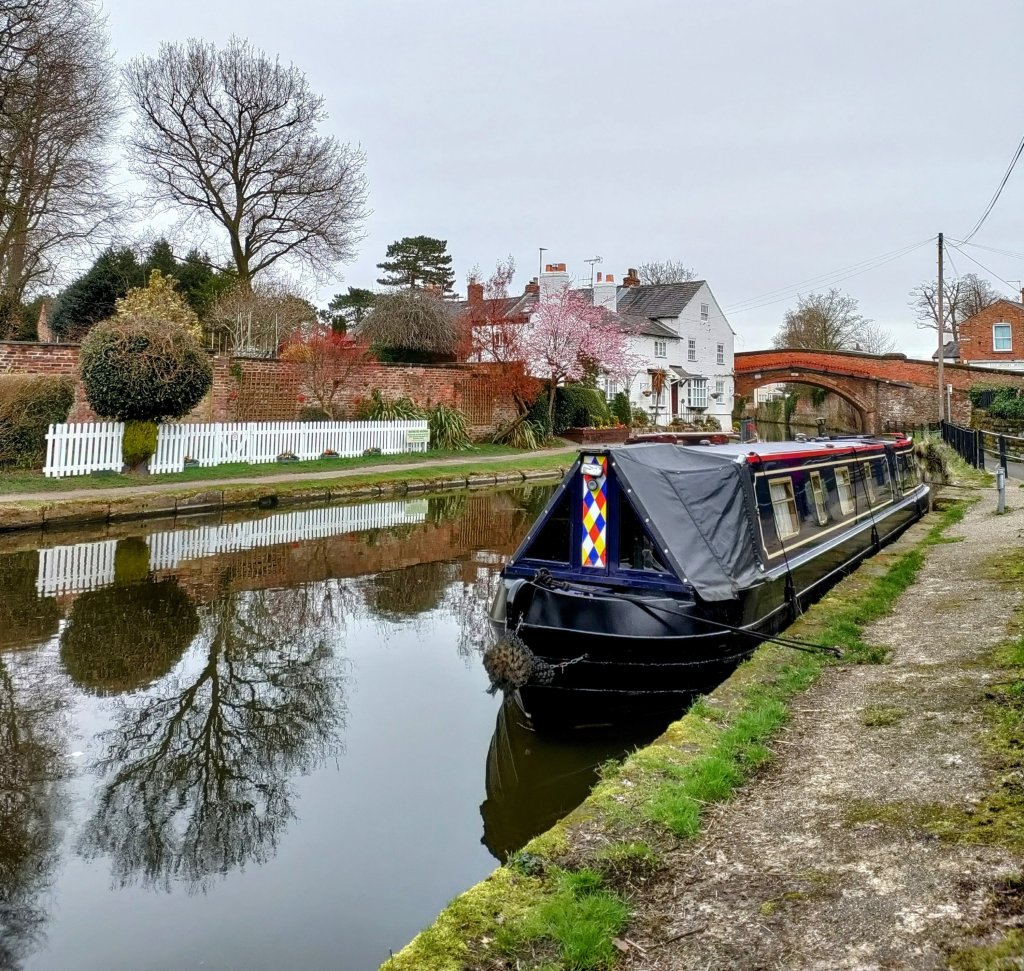
Lymm is a very picturesque village in Cheshire, with over 12000 inhabitants at the last census. With no fewer than 4 pubs and a great selection of restaurants, cafes and wine bars within five minutes of the mooring it is a popular spot with boaters. Definitely worth a visit if you are in the area.
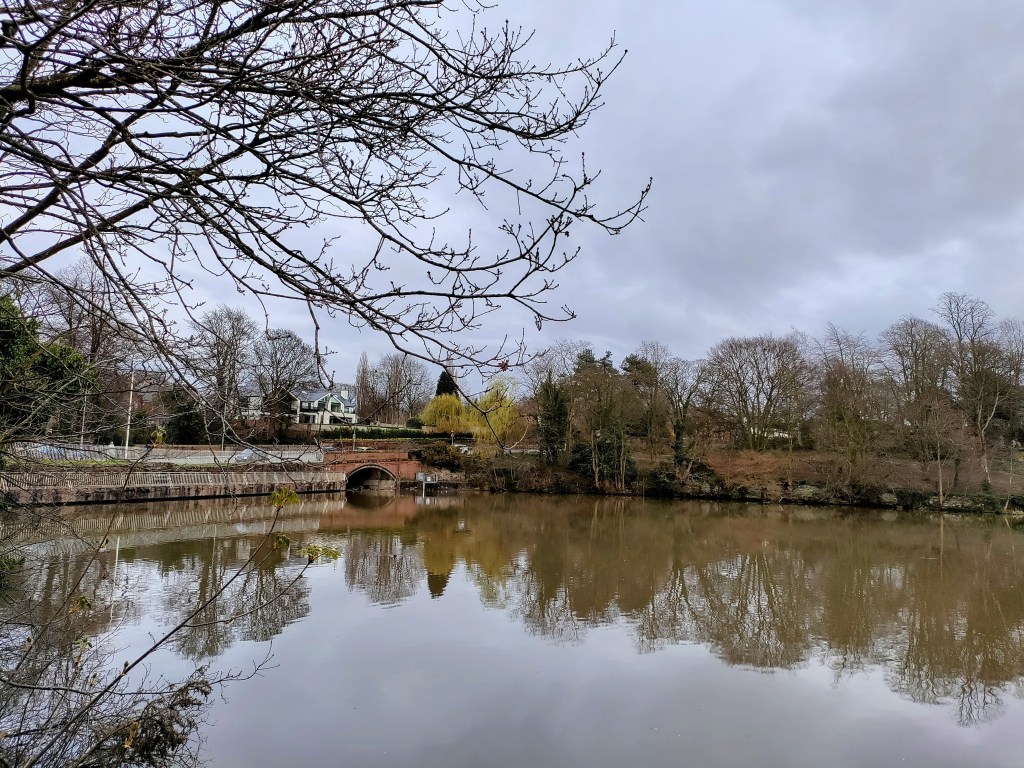
The lake and surrounding woodland is now a country park.


Lymm Cross is a Grade I listed structure in the centre of the village. It stands on a natural outcrop of red sandstone and is thought to date back to the 17th century.
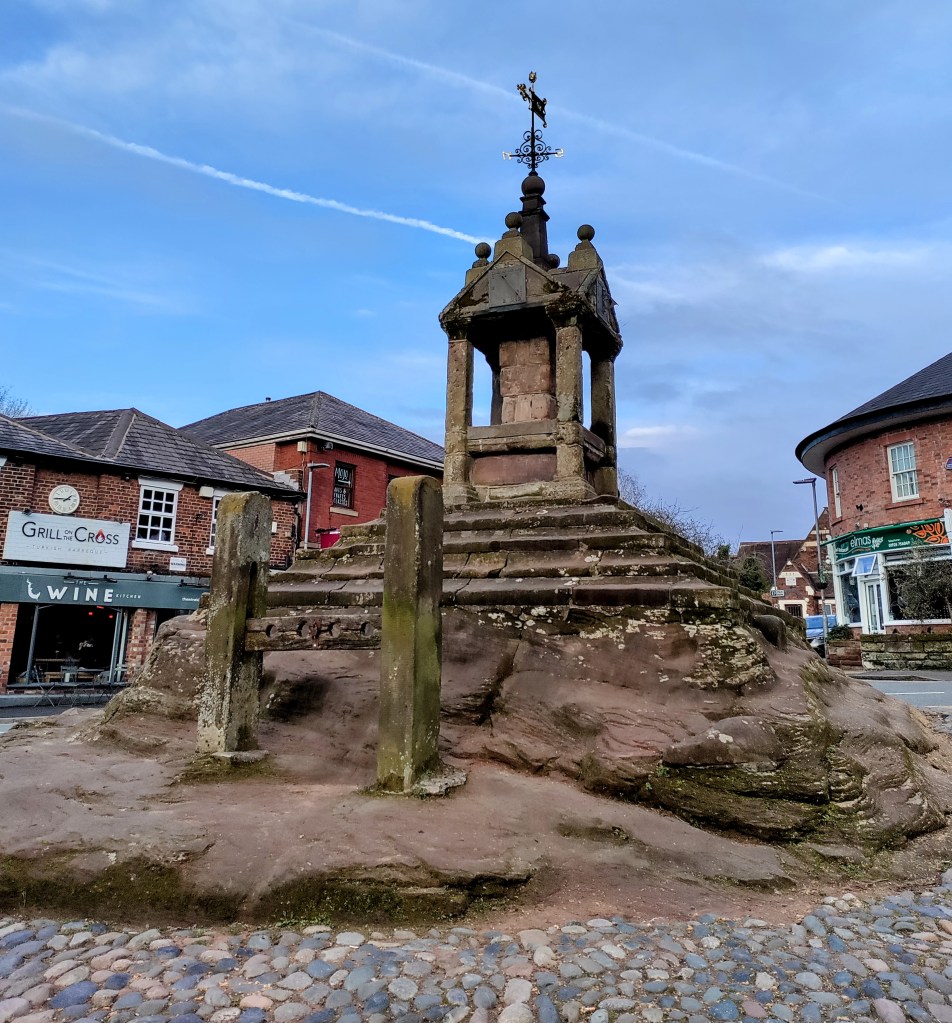
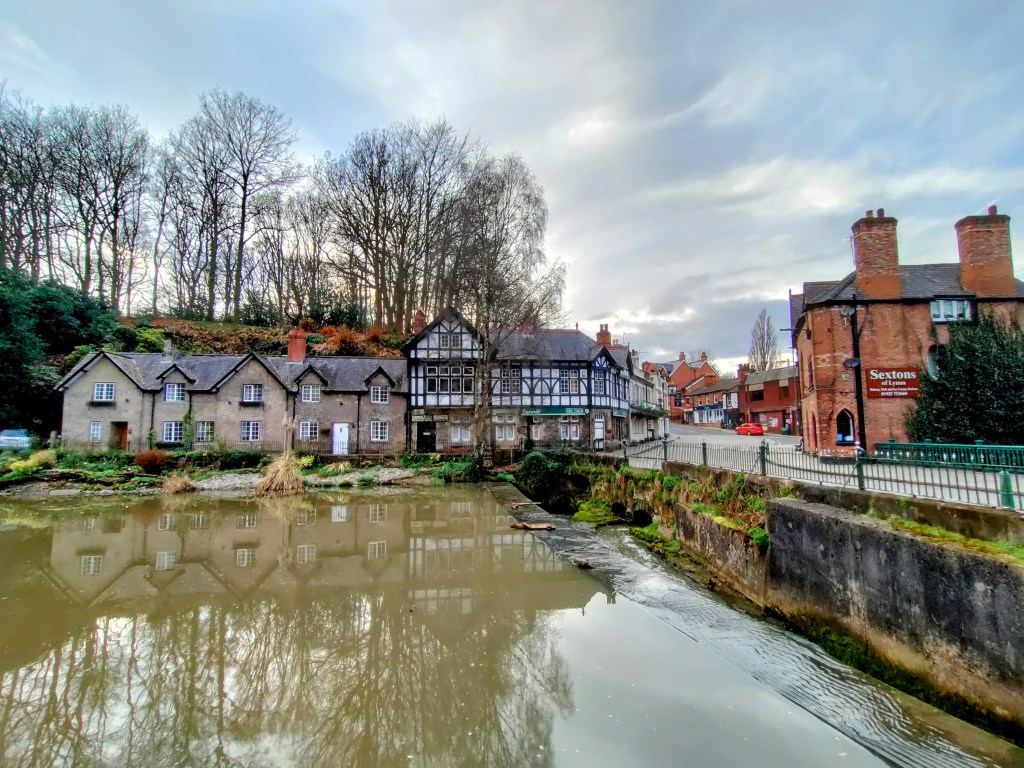
Lymm allows boaters 48hrs on the visitors moorings but after breakfast at The Terrace we carried up the Bridgewater.
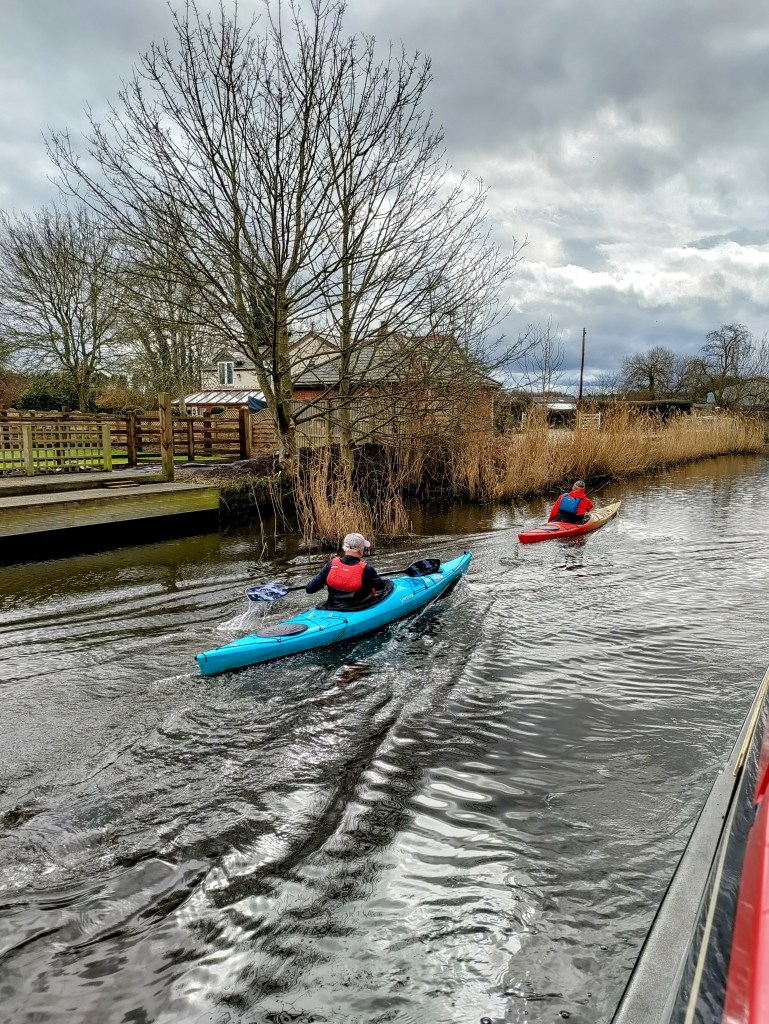
These two gents were having a picnic at the side of the canal when we left Lymm. An hour and a half later they overtook us! We met them again half an hour later, packed up and ready for home!


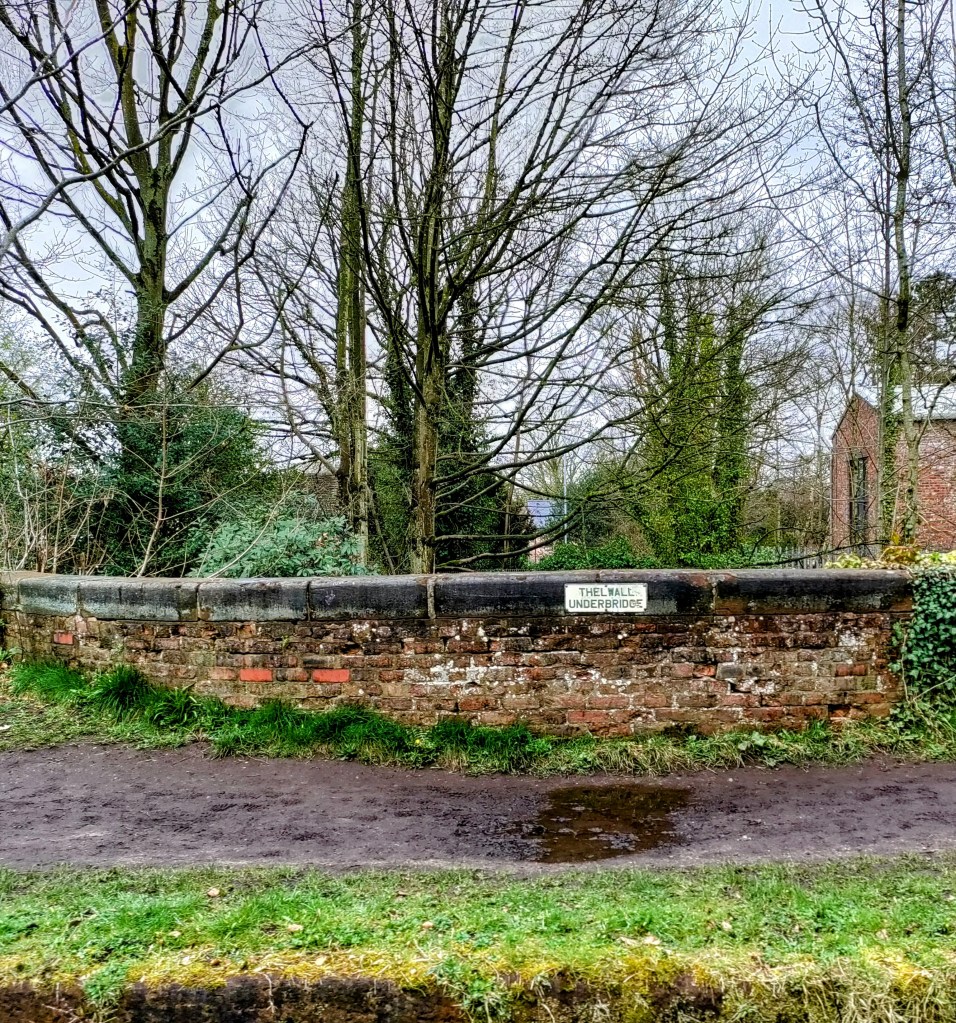
I am reliably informed that this is called an underbridge because the road was tunnelled under the canal rather than an Aqueduct which was built over the road. Usually found on canals built prior to 1780 and very prevalent on the Bridgewater
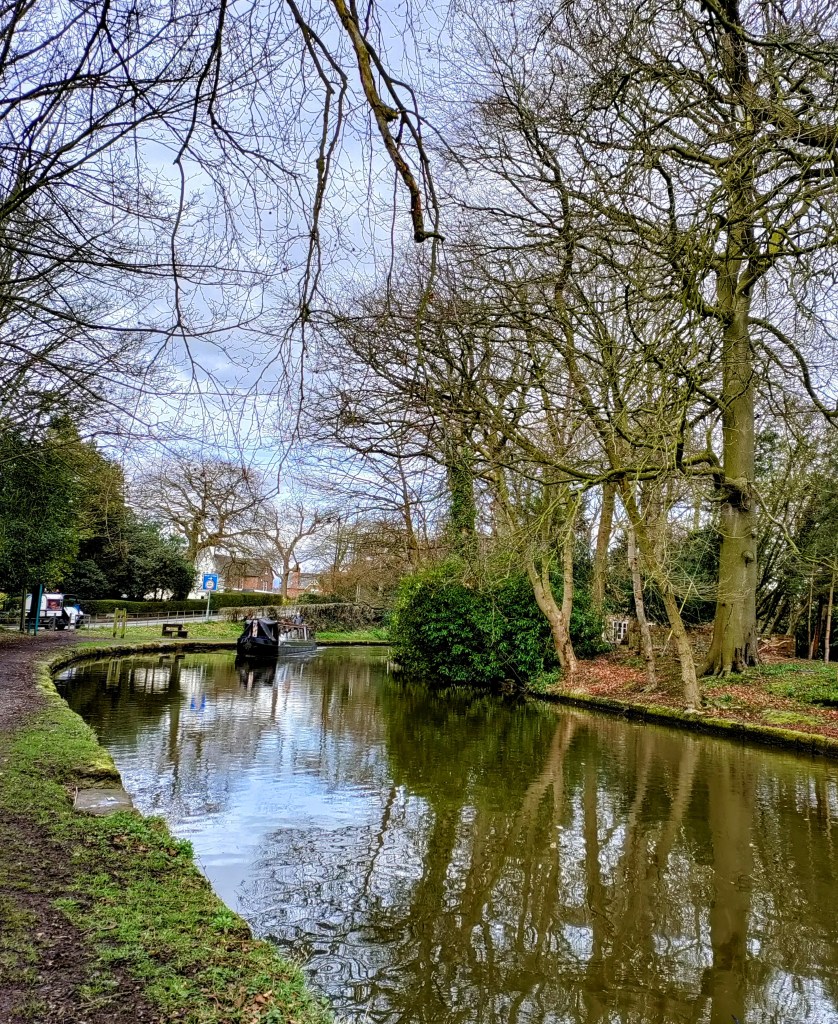
Passing through Grappenhall, Stockton Heath and on to Higher Walton, we took the Runcorn arm of the main Bridgewater Line. We knew there were good moorings there! 15 miles in 4.5 hrs!
The end of the line! The Runcorn arm ends at Waterloo Bridge.
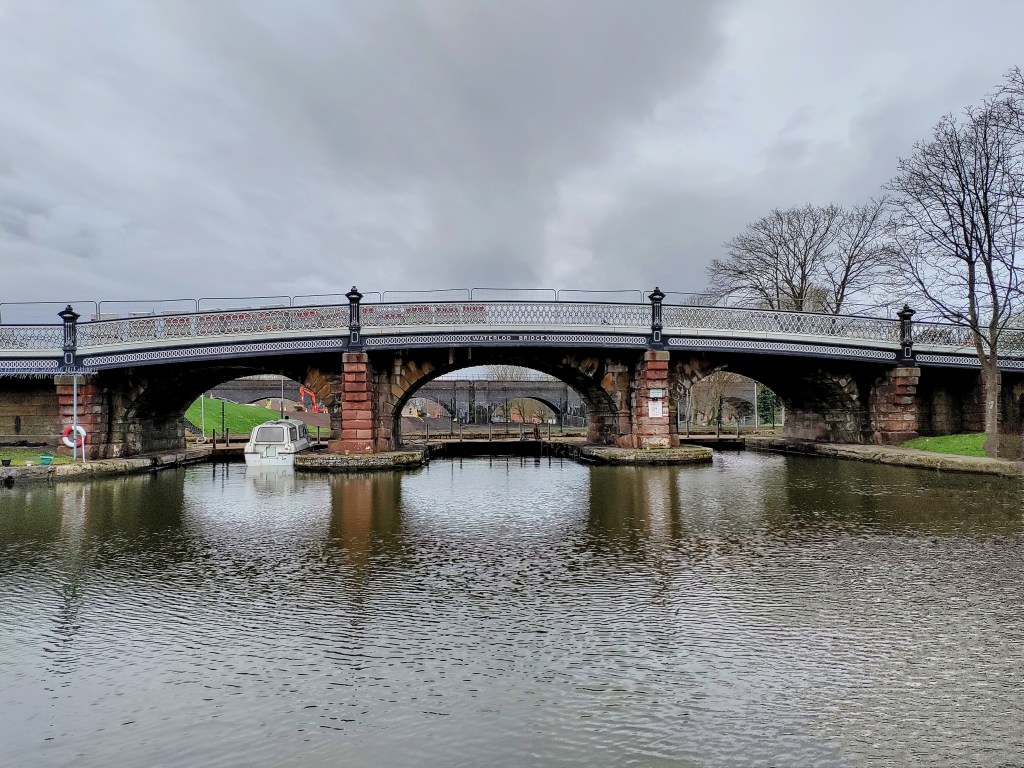
An ornately eponymous bridge which used to span the top chambers of the much-mourned Runcorn Locks. From here two flights of ten locks each – the Old and New locks – led down to link with the Manchester Ship Canal.
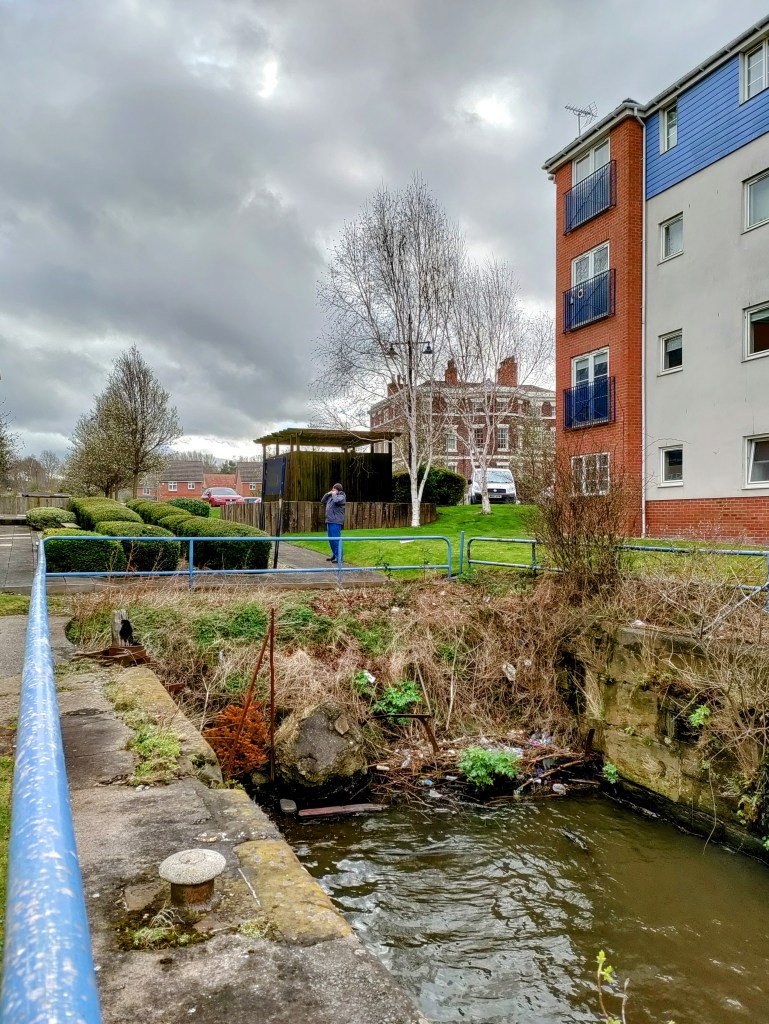
We found this fascinating, walking along what was once a busy canal!
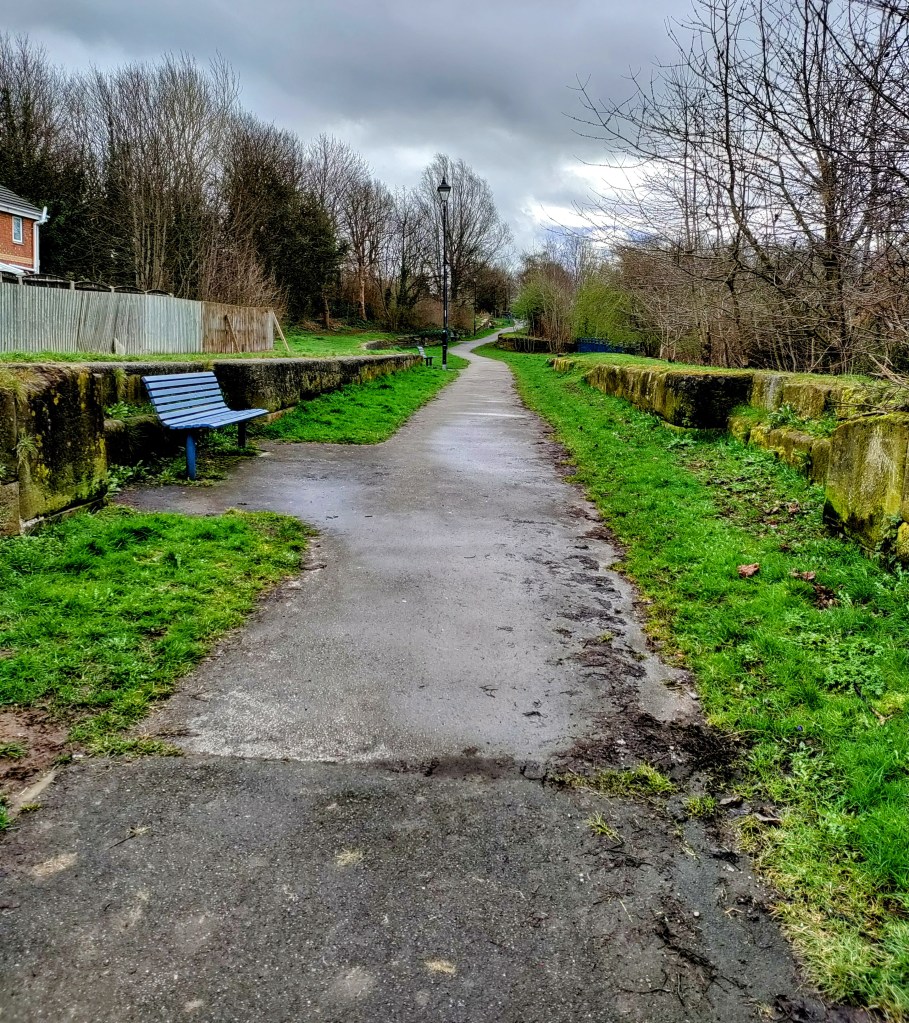
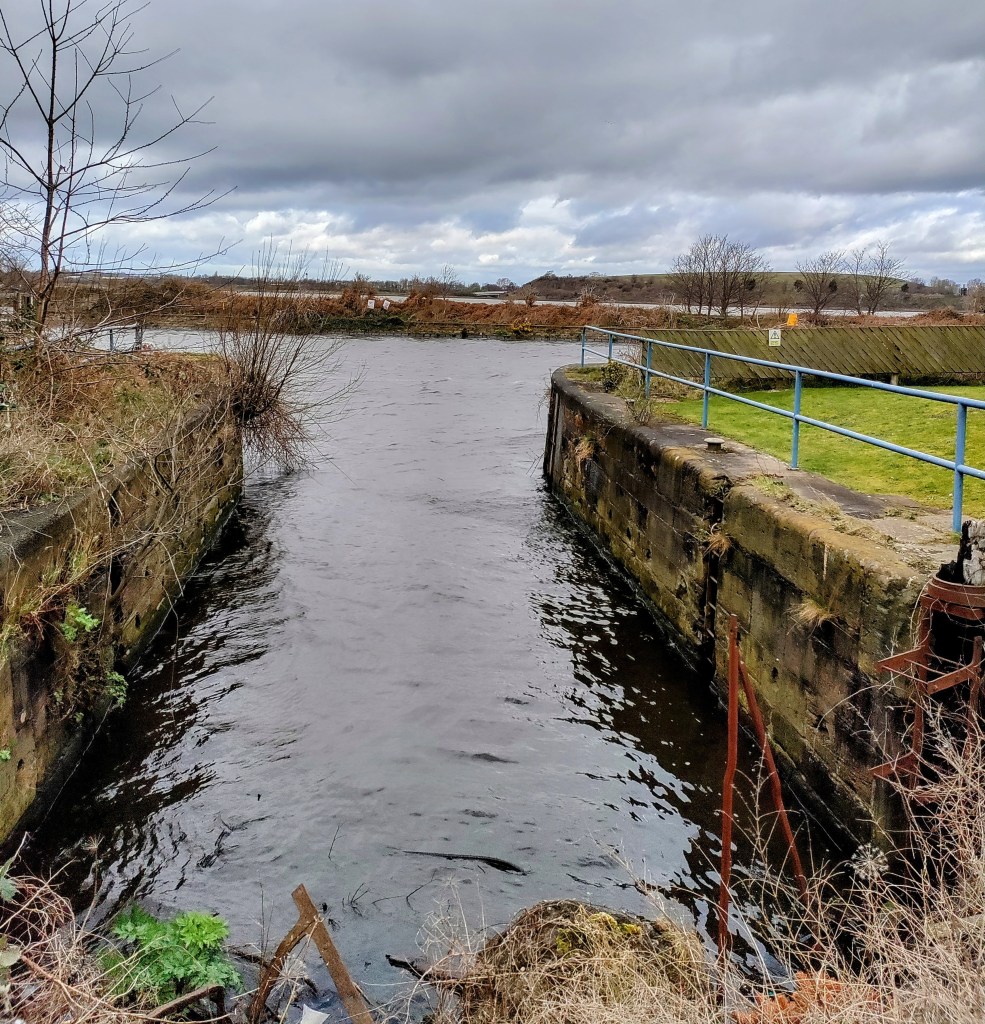
Constructed by James Brindley in 1774, on what would have been the south bank of the river Mersey, this lock marked the beginning of the Runcorn end of the Bridgewater Canal. The canal was fully opened in 1776

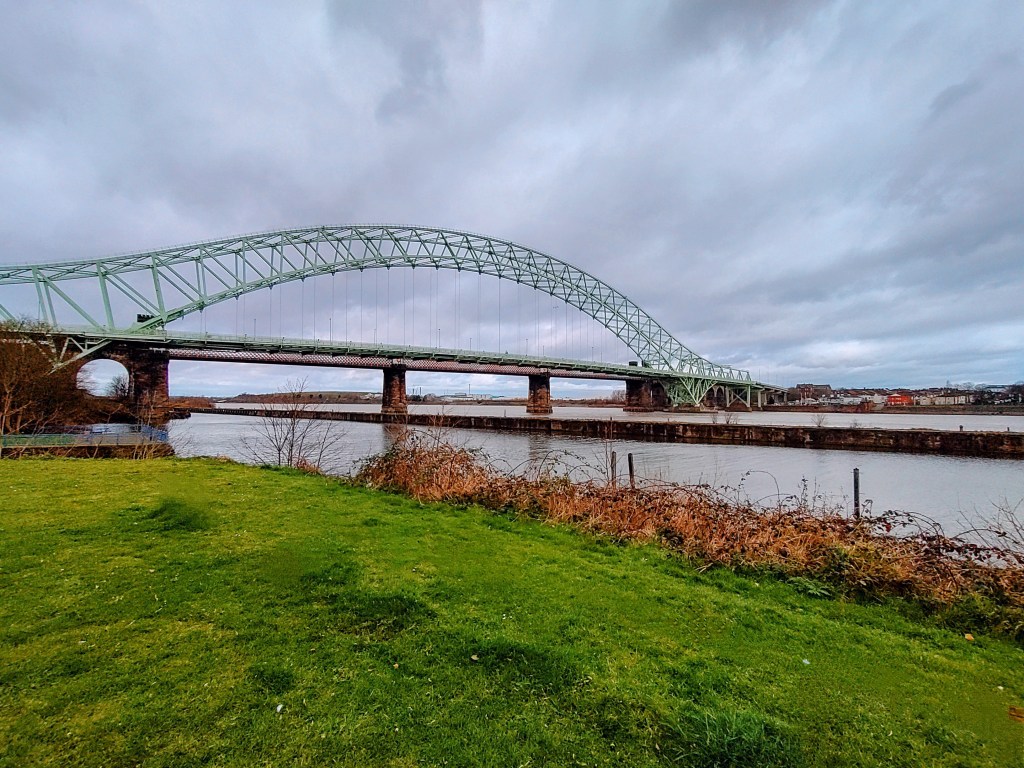
Taking a walk along The Promenade we had a great view of the Silver Jubilee Bridge. The steel arch design was used to withstand the vibrations from the adjacent railway bridge. Princess Alexandra of Kent opened the bridge on 21st July 1961 and it was renamed the “Silver Jubilee Bridge” in honour of the Queen’s Jubilee after it was reopened in 1977 following widening works. At the time of its construction it had the third longest steel arch span in the world at 330m (1082ft). It had the longest vehicular span in the country but this record was held until the Tamar Bridge was complete by 2001.
And not for a pension would you get me to walk up the outside like these guys!

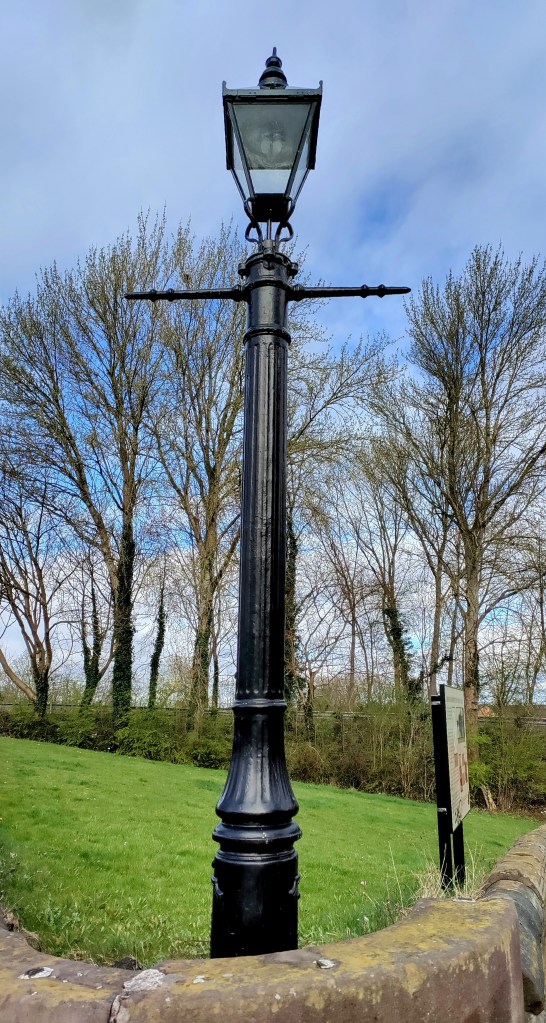
Who knew…. Sewer Gas Destructor Lamps were invented in 1894 by Joseph Edmund Webb of Birmingham, and his invention was patented in 1895. His idea was to vent dangerous and inflammable methane gas directly from the underground sewer mains up through the lamppost where it would be burned at the top to produce light.
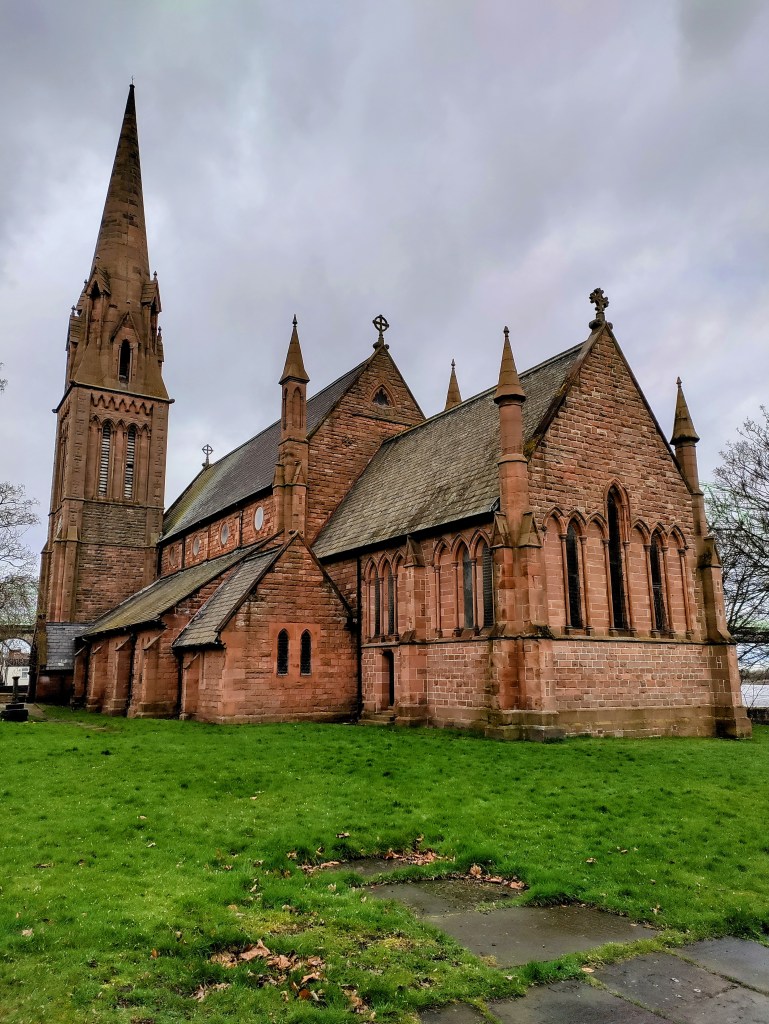
St Mary’s parish church was built to replace an earlier church nearby which had been damaged by subsidence. It is constructed in red sandstone and has capacity to hold 770 people
Thank you for taking the time to read this blog. Thanks too to tourist information boards, Pearson’s Guide, Wikipedia, Cheshire Tourist board for the information.
 H&P Adventures
Lovely informative narrative. D Ed njoyed the read.
LikeLike