

There is much written and recorded about the First World War and I’m unsure how much I should rehearse here, how much my readers know or might be interested in knowing. I’m also getting behind again! In some of our stopovers in rural France we have discovered the internet is slow or non existent. Five of us hanging off it doesn’t help me keep up to date either. And should this be a diary of each day, a synopsis of a few days? We have experienced so much that I feel the need to comment regularly, there is also that ‘work ethic’ thing kicking in! Now I have started I must continue!
Our accommodation consists of an open plan ground floor, kitchen, dining, living area and shower room. It is comfortable if a bit dull. Up the spiral staircase there are two large double rooms and a twin room. It is stifling upstairs! The only door we have access to opens on to a patio area with a table and chairs which gets the sun for most of the evening. We have spent our evenings here, chatting, surfing, eating and playing our good old Monopoly Deal!!

We do have a plan for the weekend and for Friday it was Vimy Ridge and Notre Dame le Lorette.
The day started very foggy and on route we came across the cemeteries of Le Targette, where the French and British have resting places side by side. All of the cemeteries we have visited have been peaceful, even serene places but the weather gave Le Targette an eerie feeling. The French side is simple with crosses marking the graves, the British has the traditional Portland stone headstones.
For more information on the formation of the cemeteries please refer to…. https://en.m.wikipedia.org/wiki/Commonwealth_War_Graves_Commission
The French cemetery contains the graves of 11,443 French soldiers and officers who fell in the First World War. There are also 593 French, 170 Belgian and 4 Polish graves from the Second World War. The British cemetery contains 335 British soldiers, 297 Canadians, 3 South Africans, and 3 Indians. Most were killed during the Second Battle of Artois from 9 May until 17 June 1915, the purpose of which was to break the heavy lines of German defence before attacking Vimy Ridge.
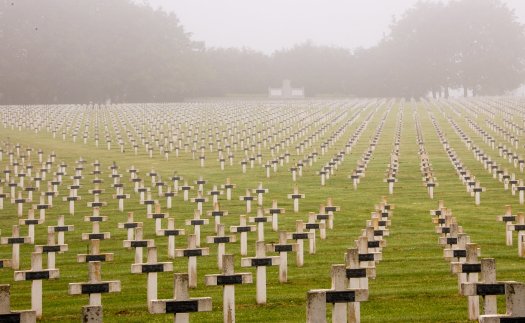
The French side…
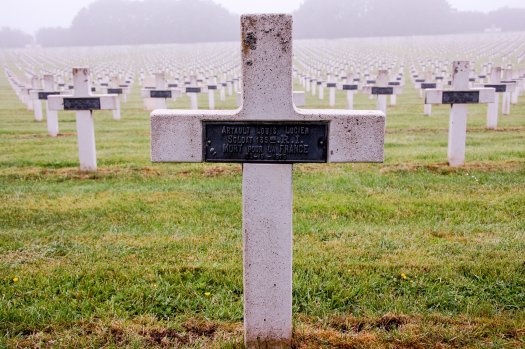
A French headstone
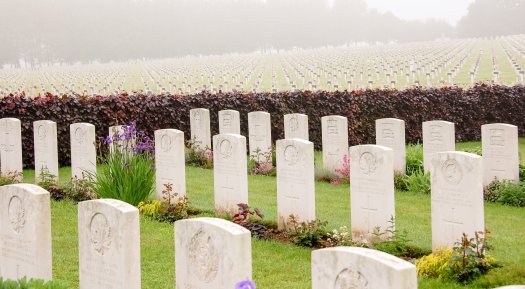
The cemeteries are separated by a copper beech hedge.
We headed on to Vimy Ridge, the Canadian Memorial Park. It is situated at the highest point of the 14km long Vimy Ridge. On 9th April 1917 the four divisions of the Canadian Army Corps, fighting together for the first time and assisted by the British Fifth Division, stormed the ridge. The 117-hectare park is still dotted with shell craters. The trenches and tunnels recreate the conditions of the battlefields. The Canadian Memorial monument was designed by Walter Seymour Allward and commerates more than 11,000 soldiers killed in the first world war who have no known grave.
The memorial is Canada’s largest overseas National Memorial. It commemorates more than 11,000 men of the Canadian Expeditionary Force killed during the First World War in France, many of whom died in the Battle of Vimy Ridge. The site is staffed by Canadian students who go through an application and interview process to gain a four month placement at this and the Beaumont–Hamel Newfoundland site. We found them to be very enthusiastic, engaging and knowledgeable. The tour was excellent, explaining how the Canadians came to be in the was, their objectives and preparation at Vimy Ridge and a visit to the underground tunnels…. Great relief from the now blazing sunshine!

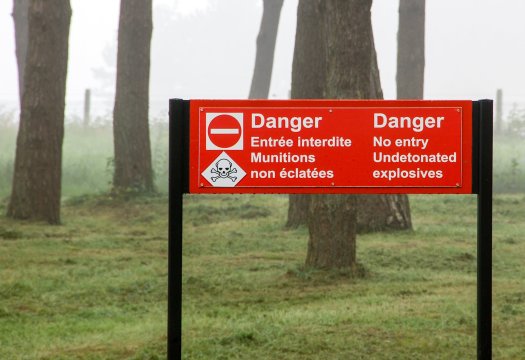
Wartime tunnels, craters, and unexploded munitions still honeycomb the grounds of the site, which remains largely closed off for reasons of public safety.

The memorial is made of Seget limestone from an ancient Roman quarry located near Seget, Croatia built on a foundation of 11,000 tonnes of concrete and steel and took 11 years to build.

This saddened figure represents Canada – a young nation mourning her fallen sons. This figure was carved from a single, 30-tonne block of stone – the largest piece in the monument.

The preservation of the trenches etc gives an amazing insight as to how close both sides were to each other and the concept of no man’s land and the challenge of the objective.

The new interpretive centre was opened in April 2017
http://www.greatwar.co.uk/french-flanders-artois/memorial-canadian-national-vimy-memorial.htm
https://en.m.wikipedia.org/wiki/Canadian_National_Vimy_Memorial
After lunch in Souchez we stopped at the Caberet Rouge cemetery. Named after a local cafe which used to be on the site and designed by Frank Higginson, it is one of the largest in the region and contains 7,655 commonwealth graves, more than half of them unidentified.

Our next stop was Notre Dame de Lorette. It is just staggering to think that 40,057 French soldiers are buried here, almost all from the First World War. Pilgrimages to Notre-Dame de Lorette date back to 1727 and ruins of a chapel from 1870 have been discovered.
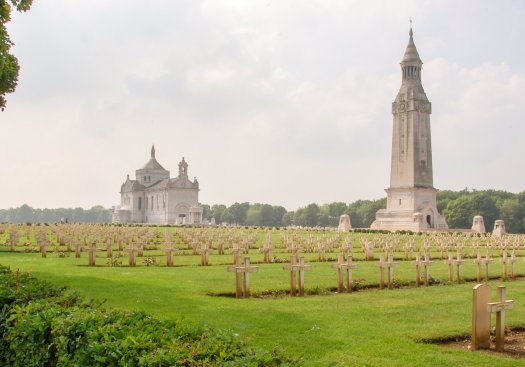
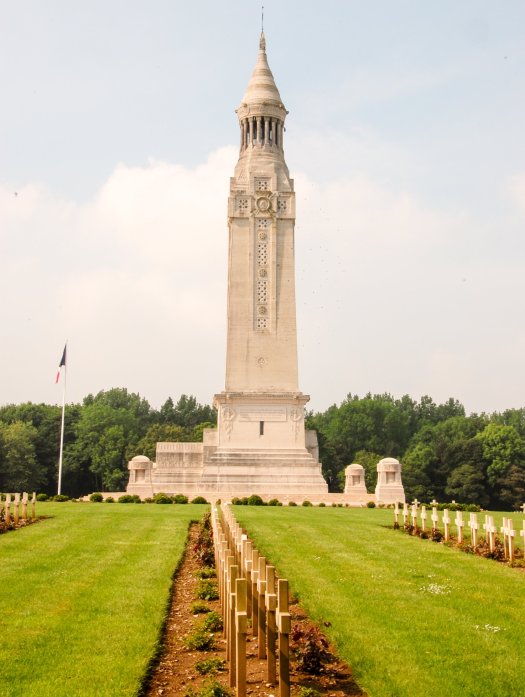
The Lantern Tower was designed by architect Louis Cordonnier and the first stone was laid in 1921. It is 150ft high and the base is a square with each side measuring 35ft long. After dark the beacon from the tower revolves five times each minute and can be seen up to 45 miles away.
Inside the tower is the most beautiful crpyt containing remains of an unknown soldier from the second World War, a soldier from the North African War and a soldier from the Indochine war…. This was a wow moment.

On the opposite side of the road from the cemetery is the Ring of Remembrance. Built in 2014 it contains 500 steel plaques arranged to look something like an open book and a circle. 579,606 names of soldiers who fell during the 1st World War in Nord-Pas dear Calais are engraved, in alphabetical order, without making any distinction by nationality, gender or religion one after another on the plaques



I think George deserves a new page lest this disappears in to the ether before I finish 😀
 H&P Adventures
Vimy is remarkable. I couldn’t get over how close the front lines were to each other.
LikeLiked by 2 people