

Our journey has brought us north to the town of Ypres just across the border in Belgium. We have come to experience the ceremony of the Last Post, held every evening at the Menin Gate before we spend the weekend near Arras visiting the Somme area.
If we had difficulty with the French roadsigns, the ones here are a total mystery. We were round Ypres three times trying to locate our B&B and in the end just went the 50yds the wrong way down the one way street to the parking area!
Great little find is Cocoon if any of our readers are looking for somewhere to stay here… The roof is flat because it was blown off in the last war and not replaced as a vaulted roof. The inside has been stripped back to natural brickwork and many of the original features retained. Our hostess, Sophia, speaks perfect English and has thought of everything her guests might need with tea, coffee and fruit freely available, comfortable well appointed rooms and every drinks taste accommodated in the reasonably priced minibar!! The breakfast was amazing too… full continental options AND cooked eggs and bacon!
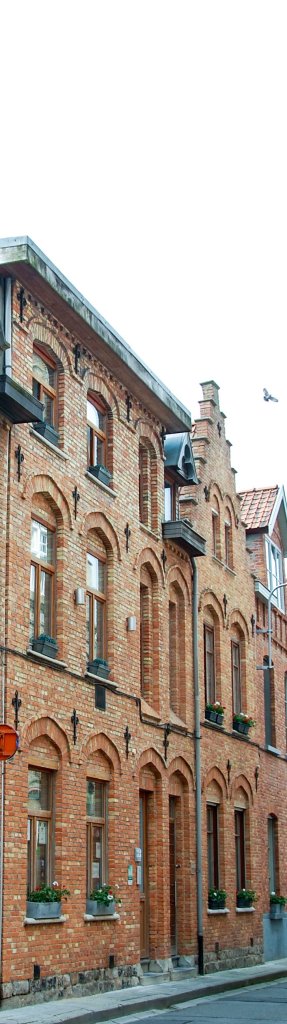
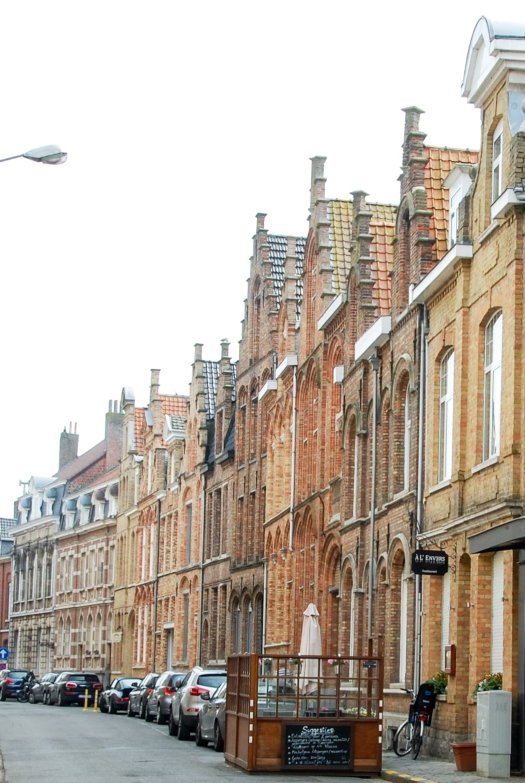
We found that Ypres (also known as Leper) itself is a compact town with very pretty architecture, a good range of shops and restaurant and a haunting past. It played an important role in the First World War. Fierce battles took place here and in the surrounding areas where it is believed 300,000 soldiers lost their lives on the front line known as the Salient.

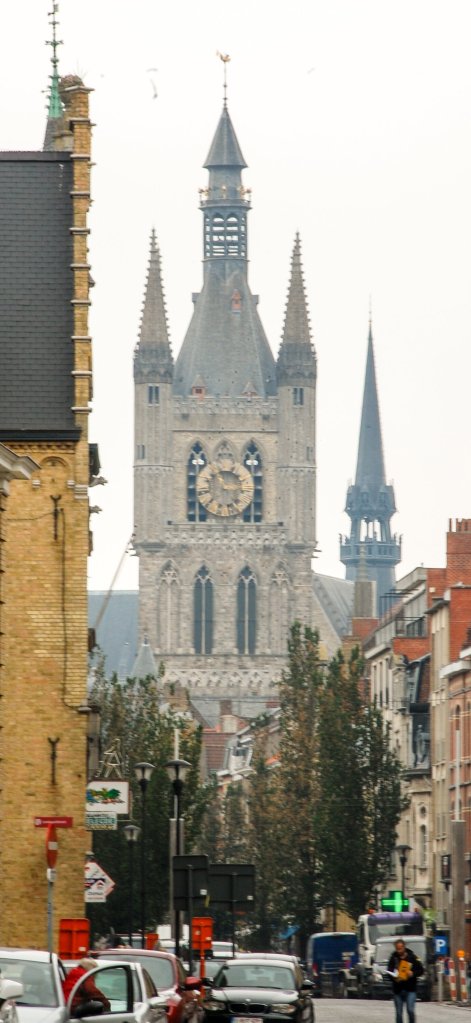
The Lakenhalle is the most impressive building in Ypres. Located in the Grote Markt, it has been restored almost entirely to its 14th century glory including a 70m high belfry tower. The bui!ding houses the In Flanders Fields museum….


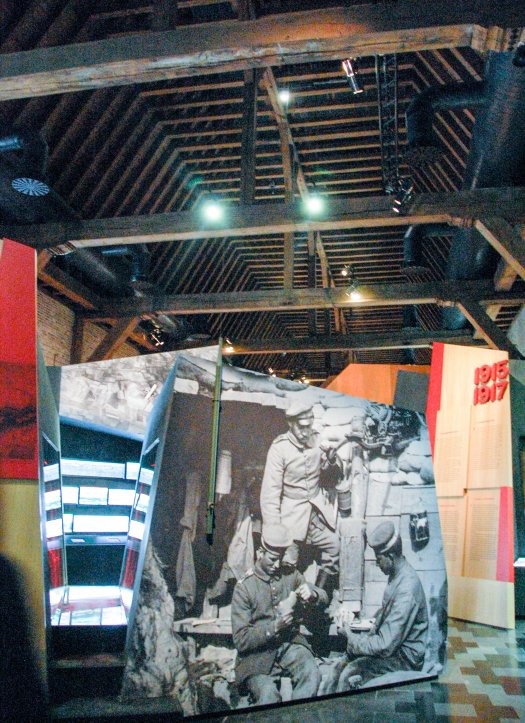
The architecture of the building was beautiful and the exhibits of the museum thought provoking.

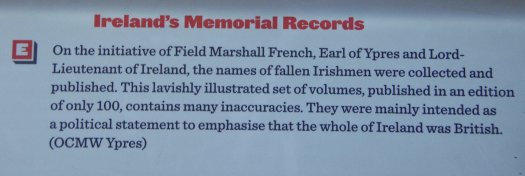
These records allegedly contain the records of the Irish who died in Flanders.
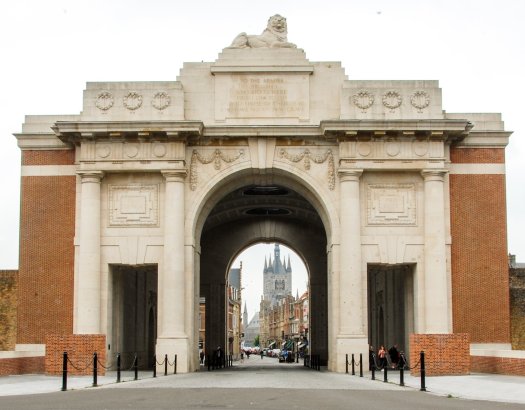
The Menu Gate memorial is dedicated to the British and Commonwealth soldiers who were killed in Ypres Salient in WWI and whose graves are unknown. The gate marks the starting point for one of the main roads out of the town that led soldiers to the front line. It contains the names of 54,395 soldiers inscribed by regiment in to the limestone. It is an incredibly moving experience to see and read list after list of names and I don’t think it possible to fully comprehend how many lives these names represent…
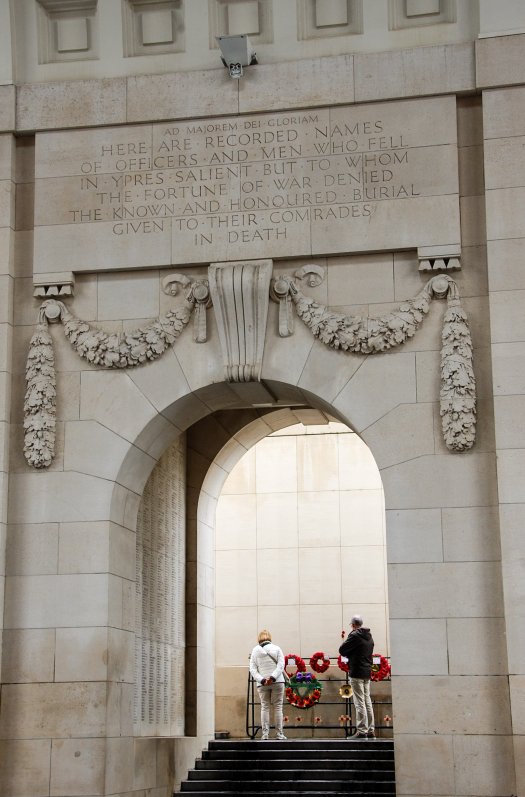
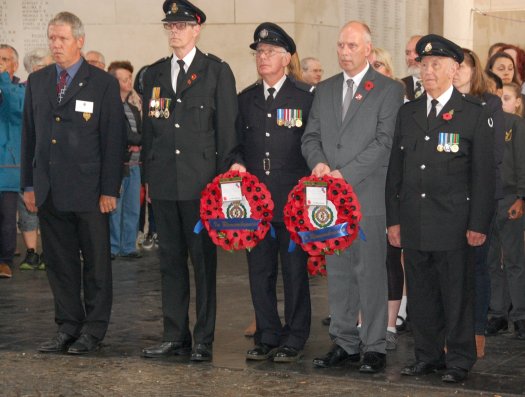
The Last Post ceremony takes place every day except Christmas Day at 8pm – you really need to be there at least an hour before hand if you want to stand at the front! The tradition started in 1928 and each evening different instruments, soldiers or organisations take part. We had the privilege of a bagpipe and representatives of the ambulance service. We were standing beside members of their group from the Nottingham and Yorkshire area – and of course there was the colleen from Killinchy, Co Down who had married a soldier. You can take the girl out of Norn Iron but you can’t take Norn Iron out of the girl 😊
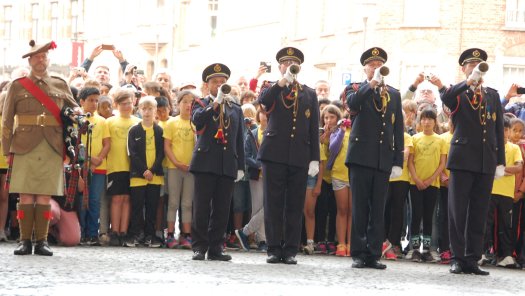

Following the ceremony we popped in to the pub across the street. Within minutes the skies opened and a thunderstorm started lasting a couple of hours. We ended up sprinting back to our B&B!
I have noted a few facts and thoughts on this place but there is so much more to learn and know and Wikipedia is a good place to start if you want to know more…
https://en.m.wikipedia.org/wiki/Menin_Gate
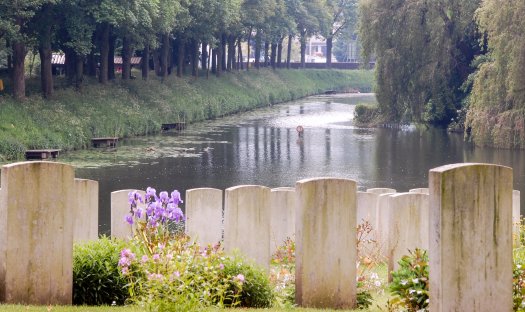
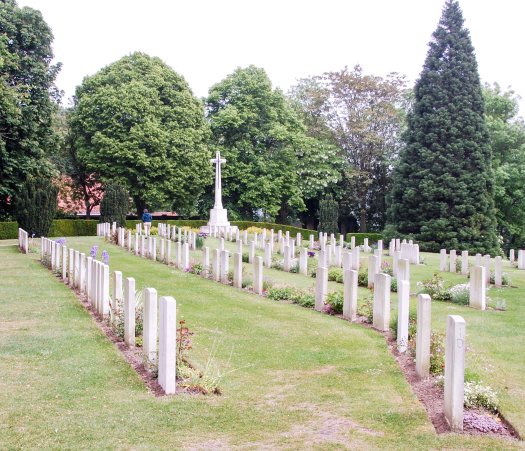
Earlier in the day we had taken a walk along the river and visited Ramparts Cemetery It was begun in November 1914 with French soldiers being laid to rest here. At that time a detachment of the French Army was positioned in Ypres and on the Allied Front Line to the north and north-east of the city. French soldiers were using the protection of the fortified ramparts to provide shelter and living spaces near to the Lille Gate.
From February 1915 to April 1918 the cemetery was used by Commonwealth Forces. Most of the 1915 casualties buried here were killed in February, March and April and then in July and August of that year. After the Armistice in November 18 the French remains were removed and reburied in a French National Cemetery. There are 198 Commonwealth graves in the cemetery, of which 188 are identified casualties. The cemetery was designed by Sir Reginald Blomfield.
I just found it a beautiful resting place, looking out over the river.

 H&P Adventures