

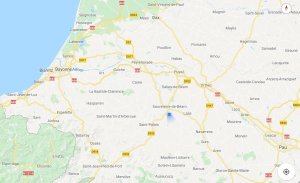
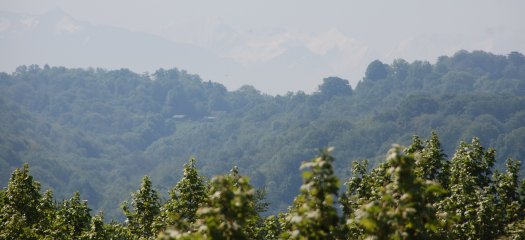
There is so much of the history, politics and indeed geography of this area that is so close to home it is a bit uncanny! It reminds us of the drumlins and mountains of County Down only on a much greater scale.
The sign posts are in two languages, French and Basque – as if isn’t hard enough for the navigator! According to the French Constitution ‘the language of the Republic is French’ and despite several attempts to add “with respect to the regional languages that are part of our heritage” by 44 deputies in 2006, the proposal was rejected by 57 votes against 44 in favour. There is a Basque nationalist political movement going back to 1963 and the area has experienced its share of violence in the search for independence.
We have settled in to a comfortable routine. We don’t need or want to see everything – that would be impossible. We discuss what we might want to do the next day before bedtime – grateful to our hosts for the brief summary of places we might want to visit. We get up when we waken, Paul brings Hazel her cup of tea, we discuss further what we might want to do or arrangements we need to make for our travels further north and hit the road when we are ready. We lunch out in the Basque style, graze on cheese, hams, tomatoes washed down with local wines in the evening. We are on vacation!
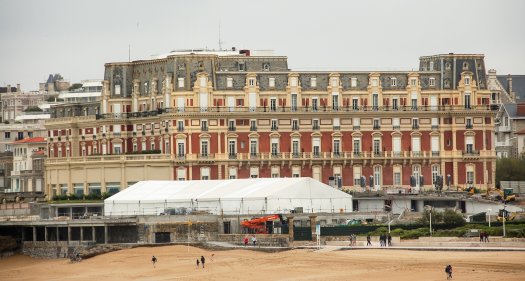
Our first outing in this area was to the elegant seaside town of Biarritz and the coastal route to Capbreton and Hossegor. Biarritz has been a popular resort since Napoleon III and his Spanish born wife, Eugenie, arrived inheritance mid 19th century. The Hôtel du Palais dominates the Grande Plage. It was originally built for the Princess Eugenie around 1855 as a summer villa. In 1880 it was sold and converted in to a hotel casino. It was devastated by fire in 1903, but was lavishly rebuilt and to many years attracted the international elite, including European royalty such as Edward VII, who had several extended visits. The building was undergoing more extensive renovations on our visit. It was almost impossible to get a decent photograph without machinery!


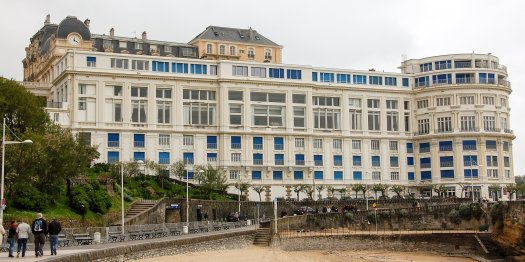
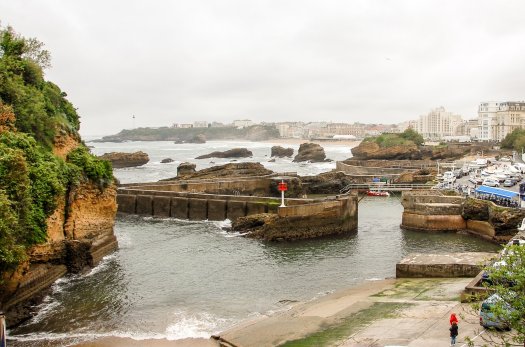
The promenade along the Grande Plage, popular now with surfers, leads past the Casino Barriiere, which has fine art Deco ceiling and floor, to the peaceful square Place Ste-Euginie and Port des Pêcheurs. This is a modest harbour built by Napoleon III for the town’s fishermen in 1800s. The walls of the harbour are high to protect the boats – Paul was very interested in how any boat gained access! The row of cottages where the fishermen lived are now restaurants serving dish and seafood.
Staying with our lighthouse theme…. Biarritz Lighthouse was built in 1834. The current lenses are more than 100 years old, dating back to 1904 and have a range of 26 miles.
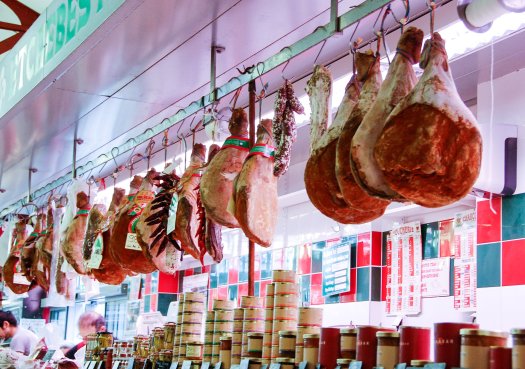
To be fair we stumbled upon Les Halles de Biarritz – the food market. With its cast-iron support it was built in 1885 and is laid out with cheese, page, fresh meat – the smells were unbelievable and the choice amazing.


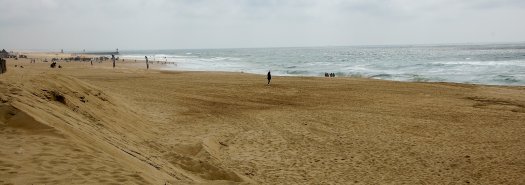
The lighthouse lies between the Biarritz’s rocky coast and the smooth sands of Landes and this is the direction our travels took us next – to Capbreton. There are hundreds of miles of purpose built tarmac roads for cyclists in the area, but we decided to give that a miss and settled for lunch in one of the squares where we were entertained by a local wedding! Lost count of the number of times the guests went in and out of the


The beaches go on for MILES…. approximately 140km of them, stretching from the mouth of the Ardour River to the mouth of the River Gironde.
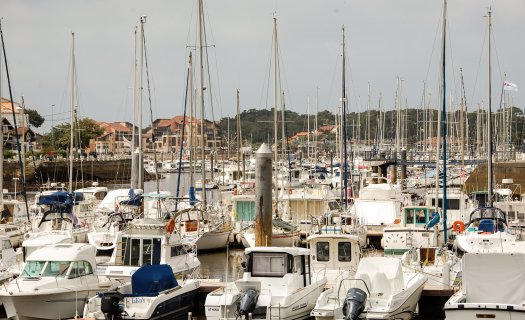
And in Hossegor, Paul was engrossed by the boats in the harbour…. you certainly have to be a little more flush to hang out here!
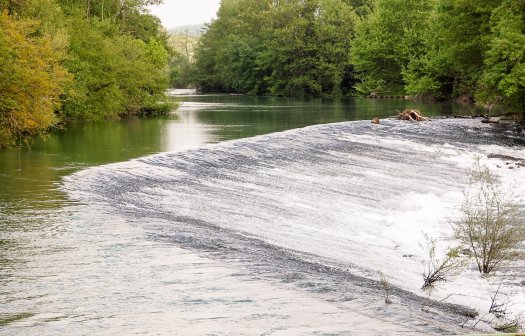
Being a couple who don’t like to take the same route home we travelled back on a road further north which brought us through the pretty village of Sorde-l’Abbaye, which had a beautiful abbey, the Abbey of Saint-Jean de Sorde, which is on the world heritage list as part of the route of Santiago de Compostela. We liked the architecture of the building and the fact that a modern hydroelectric plant had been erected on the site of the abbey’s ancient mill.


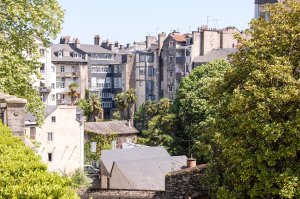
Having done the west coast on Saturday, Sunday we took ourselves east to Pau. We totally agree with lonely planet…. in many ways Pau feels closer to a Rivera resort than a mountain town with its grand villas and public parks – the clear blue skies and temperatures in the upper 20s helped support this.
We took advantage of the tourist train which started and finished at Chateau de Pau.

The Castle is the birthplace of Henri IV, King of France. It now contains one of the richest collections of tapestries in France.

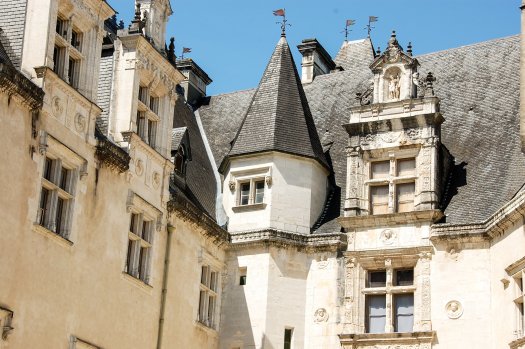
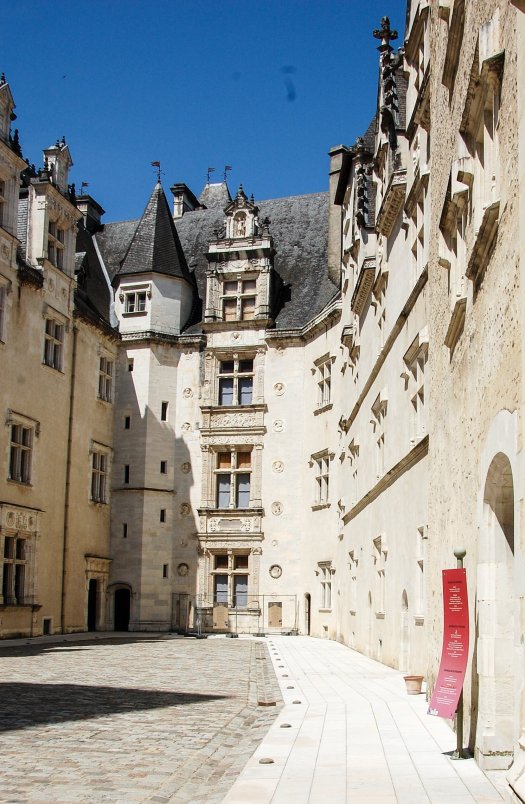
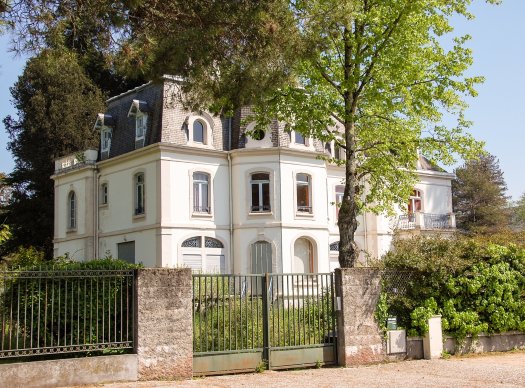
In the 19th century people from all over Europe flocked to Pau to avail of the curative powers of its clean mountain air. The English and Scottish build some amazing villas overlooking the valley and facing the Pyrénées. Paul wouldn’t let me enquire as to the price etc of the one for sale 🤔


The city boasts some fine examples of renaissance and art Deco architecture. The Boulevard des Pyrénée was built in the late 1800s and now stretches for over 2km on its 72 arches.

The city of Pau was built on a rocky peak. In 1863 the railway arrived along the riverside of the Gave. In 1908 a Funicular railway was opened to take railway passengers from the station to the Place Royale. We took a ride down to admire the bronze totems that tell the story of the Tour de France. Every year a new yellow coloured totem celebrates the winner of the race.


Having finished the train we stopped for lunch…. we picked a square that was busy with locals and perused the menu boards outside the establishments. We settled on St Jacques, it reminded us of a restaurant we had enjoyed in Montmartre in Paris a few years ago….. it was ok! Our waiter turned out to be a lovely lad from Aberdeen, with no hint of a Scottish accent, on his his second day in the job!

Being a Sunday there was little open in the way of shops but plenty of people watching to do.



Monday 7th May…. Coming up in the next installment!!! Lesson today – make notes as you go!!
Tomorrow we move north to Lot….. looking forward to seeing another area.
 H&P Adventures
😍😍😍😍
LikeLiked by 1 person